Adidas Arrow Hit CTRL 2026 Review
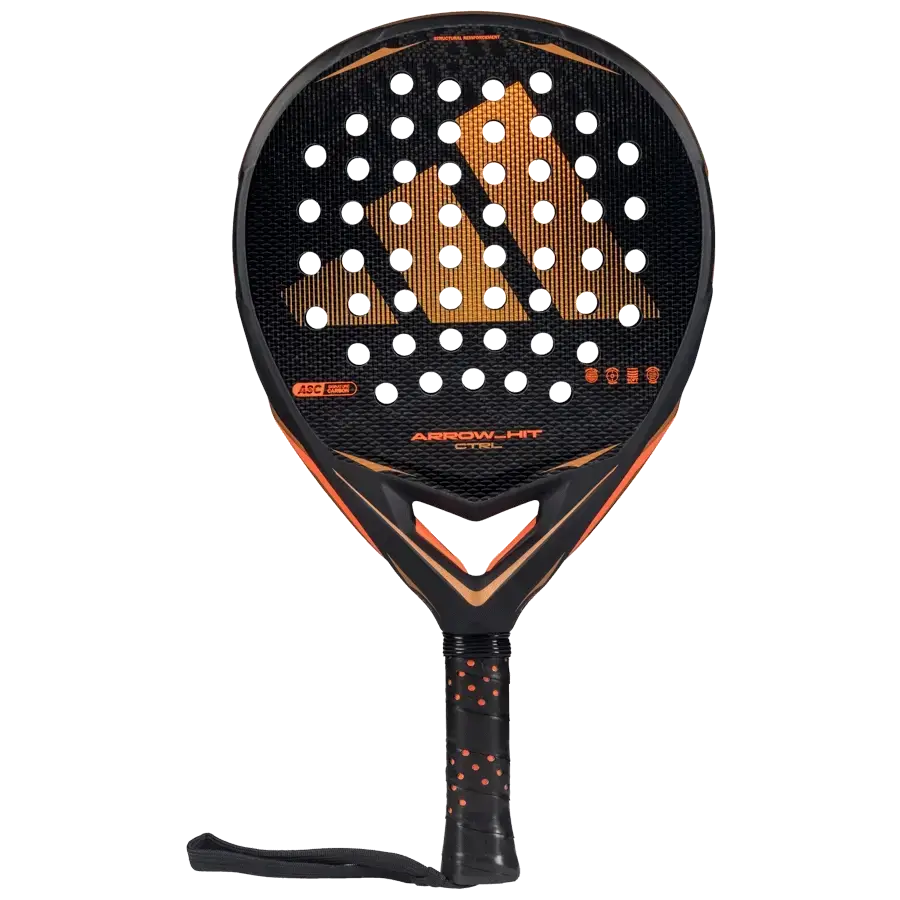
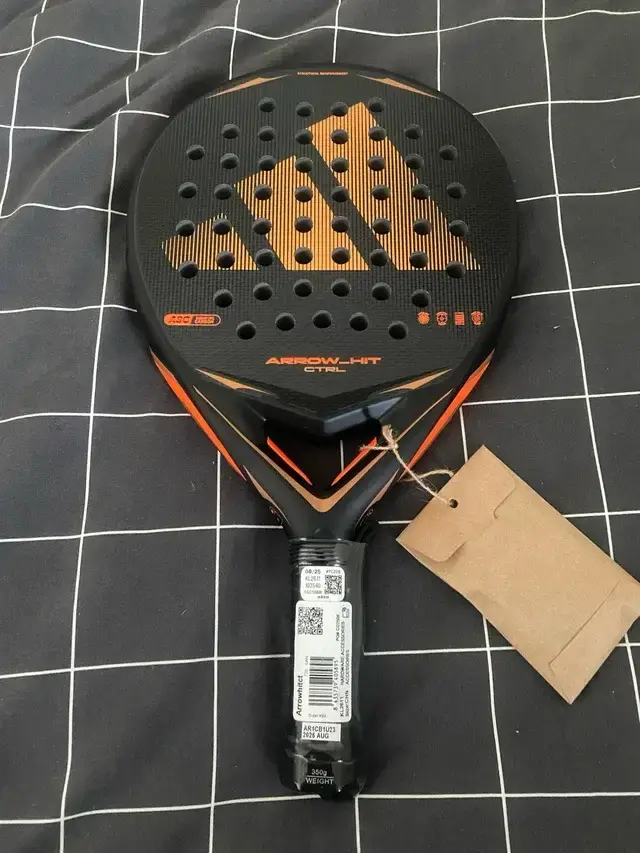
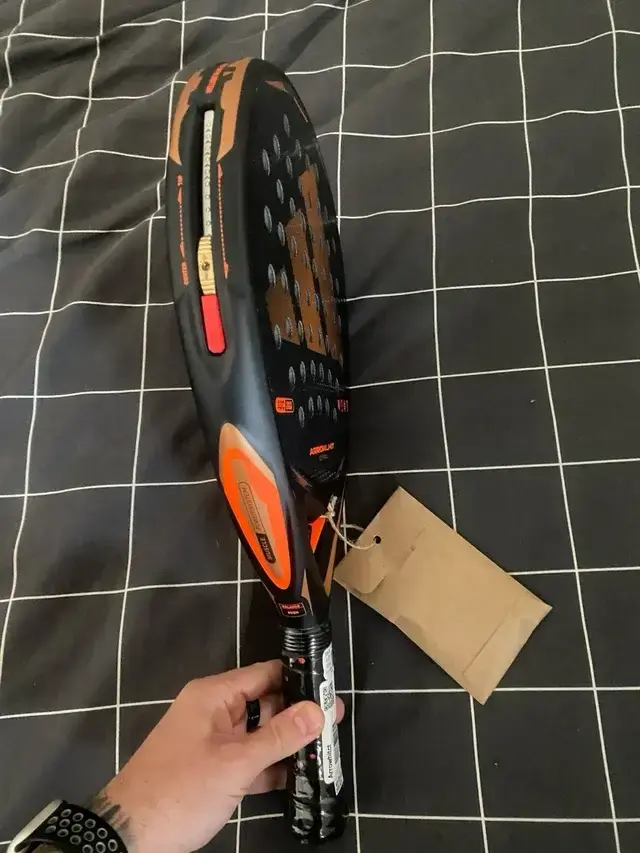
Version and lineup identification
The Arrow Hit CTRL 2026 belongs to the Adidas Arrow Hit family, which consists of four models: Arrow Hit, Arrow Hit CTRL, Arrow Hit Carbon, and Arrow Hit Carbon CTRL. Within this group, the CTRL version is the most control-focused configuration, built around a round mould and a balanced mass distribution.
In the broader Adidas lineup, Arrow Hit CTRL is positioned below the Metalbone CTRL 3.5 in terms of stiffness, swing inertia, and material complexity. While Metalbone CTRL targets advanced players seeking a firmer, more structured response, Arrow Hit CTRL focuses on approachability and stability, making it more suitable for intermediate and all-court players.
It also sits clearly apart from attack-oriented models in the Arrow Hit range, sacrificing power ceiling in exchange for a larger sweet spot and more forgiving rebound behavior.
Technical specifications
| Spec | Value | What it means |
|---|---|---|
| Shape | Round control geometry | Control-focused, wide sweet spot |
| Thickness | 38 mm | Thicker = more power and rebound |
| Weight range (claimed) | ~360–375 g | Heavier = more stability, lighter = more speed |
| Balance (estimated) | Low to medium, slightly head-light | Versatile, suits all styles |
| Face material | Fiberglass composite | Softer feel, more forgiving |
| Core | EVA Soft Performance | Good balance of control and feel |
| Frame | Carbon-reinforced construction | Structural rigidity and durability |
| Surface texture | Smooth to lightly textured Spin Blade pattern | Determines feel and response |
| Adjustable balance system | Yes — lateral sliding weight system (side-mounted balance slider) | Affects swing feel and power |
Construction and materials
The construction of the Arrow Hit CTRL prioritizes comfort and stability over rigidity. The fiberglass face introduces longer dwell time compared to carbon-based control frames, allowing the ball to stay on the face slightly longer during contact. This results in smoother energy transfer and reduced rebound volatility, particularly noticeable during blocks, lobs, and controlled volleys.
The EVA Soft Performance core further reinforces this behavior by absorbing incoming pace effectively. Under low to medium swing speeds, the racket remains calm and controlled, with no sudden acceleration spikes. The carbon-reinforced frame provides enough torsional stability to prevent excessive twisting, but without the harsh feedback associated with stiffer performance frames.
Shape and mould behavior
The round mould places the sweet spot squarely in the center of the face, both vertically and horizontally. This geometry maximizes forgiveness and minimizes performance drop-off on off-center contact, especially during defensive play and transitional shots.
Mass distribution is neutral, with no aggressive head weighting. As a result, swing initiation feels light and controlled, and recovery between shots is easy. Compared to teardrop or diamond-shaped rackets, the Arrow Hit CTRL sacrifices overhead leverage and finishing authority, but gains consistency and maneuverability in exchange.
This mould behavior makes the racket particularly effective in extended rallies, where maintaining depth and direction matters more than producing decisive winners.
Stiffness, feel, and comfort
The Arrow Hit CTRL 2026 is clearly tuned toward comfort and forgiveness rather than structural rigidity. The fiberglass face combined with a soft EVA core produces a noticeably longer dwell time compared to carbon-based control frames. Impact feedback is muted and rounded, with very limited high-frequency vibration even on imperfect contact.
Stiffness is low to medium across the face. The racket does not “lock” the ball on contact; instead, it absorbs pace and releases it gradually. This behavior favors consistency and reduces fatigue, especially in long rallies and defensive phases. Compared to Metalbone CTRL 3.5, the Arrow Hit CTRL feels significantly softer and less demanding, with a more forgiving response window.
Comfort is one of the defining strengths of this model. Arm load is low, and the racket remains playable across extended sessions without accumulating shock. This makes it suitable for amateur and intermediate players, as well as for players prioritizing injury prevention or recovery.
Sweet spot and forgiveness
The Arrow Hit CTRL 2026 features a large, centrally positioned sweet spot that is one of the most forgiving within the Adidas 2026 lineup. The round mould combined with a fiberglass face expands the effective hitting area both vertically and horizontally, reducing performance drop-off on imperfect contact.
In practical terms, the racket tolerates late preparation, slightly off-center contact, and defensive stretch shots far better than carbon-based control frames such as the Metalbone CTRL 3.5. Ball speed and trajectory degrade gradually rather than collapsing abruptly, which helps maintain rally continuity under pressure.
Forgiveness is especially noticeable on low-face contact and lateral mis-hits, where the soft face and EVA core absorb shock and keep the ball playable. Compared to hybrid or teardrop control rackets, the Arrow Hit CTRL sacrifices some directional sharpness but gains margin for error, making it more accessible to a wider range of players.
This sweet spot behavior strongly supports its positioning as a confidence-oriented control racket rather than a precision tool for advanced mechanics.
Power and smash behavior
Power generation on the Arrow Hit CTRL 2026 is limited by design. The racket does not provide free acceleration or trampoline effect, and output scales conservatively with swing speed. Flat smashes and aggressive overheads require full mechanical commitment, yet even then the power ceiling remains modest.
The round mould and lower balance reduce mass transfer on overhead shots, prioritizing control over finishing ability. Smash trajectories remain predictable and easy to manage, but lack penetration compared to teardrop or diamond-shaped alternatives. Kick and por-3 smashes are technically possible, but demand precise timing and are not naturally assisted by the frame.
Compared to Arrow Hit (non-CTRL) and especially Metalbone or Metalbone HRD models, the Arrow Hit CTRL offers significantly lower overhead authority. However, this limitation also reduces overhitting risk and improves consistency in defensive overheads, bandejas, and controlled lobs.
In essence, power behavior is defensive and conservative. The racket supports rally construction and point extension rather than point-ending intent.
Net play and fast exchanges
At the net, the Arrow Hit CTRL prioritizes control over punch. Volleys feel stable and predictable, with minimal rebound acceleration. The racket keeps the ball low easily, but it does not provide free speed on punch volleys or aggressive finishes.
In fast exchanges, maneuverability is a clear advantage. The low swing inertia allows quick preparation and recovery, making it easier to handle rapid hand battles compared to heavier or more head-loaded rackets. However, the soft face limits effectiveness when trying to end points quickly; finishing requires deliberate technique rather than relying on rebound.
Overall, net performance favors patience, placement, and consistency rather than dominance.
Stability on off-center contact
Off-center stability is strong relative to the racket’s construction. The fiberglass face does not amplify mis-hits, and performance degradation on lateral or low-face contact is gradual rather than abrupt.
Compared to stiffer carbon control frames, the Arrow Hit CTRL sacrifices some directional sharpness in exchange for forgiveness. Shots struck outside the sweet spot retain playable depth and trajectory, especially on defensive blocks and neutral resets. Torsional resistance is adequate but not exceptional; the frame flex contributes more to error reduction than pure rigidity.
This stability profile supports rally-oriented play and helps players maintain consistency when timing or positioning is imperfect.
Practical on-court takeaways
In match conditions, the Arrow Hit CTRL 2026 behaves as a true control-oriented racket for developing and recreational players. It reduces error rates, supports defensive consistency, and minimizes physical strain. Depth and pace must be generated actively, but the racket does not punish incomplete swings harshly.
It performs best in right-side roles, baseline-oriented patterns, and extended rallies where stability and comfort outweigh the need for aggressive finishing. Players transitioning from beginner to intermediate levels will find it confidence-building, while advanced attackers may find its ceiling limiting.
Comparison within the Adidas lineup
The Arrow Hit CTRL 2026 sits at the entry–to–mid control end of the Adidas 2026 padel lineup. Its role is clearly differentiated from Metalbone and higher-tier Carbon variants by prioritizing accessibility, comfort, and forgiveness over precision and structural rigidity.
Compared to the Arrow Hit 2026, the CTRL version shifts the balance further toward consistency and defensive safety. Power output is reduced, launch is lower and more controlled, and the round geometry increases usable hitting area. The base Arrow Hit offers slightly easier depth and more neutral behavior, while the CTRL version is explicitly tuned for error reduction and controlled rally play.
Against the Arrow Hit Carbon CTRL, the difference is primarily material-driven. The Carbon CTRL introduces a stiffer face and sharper response, improving directional precision and net firmness. The Arrow Hit CTRL 2026, with its fiberglass face, trades that precision for comfort and tolerance. Off-center contact is more forgiving, but feedback is less defined.
When compared to Metalbone CTRL 3.5 (2026), the gap becomes structural. The Metalbone CTRL offers significantly higher torsional rigidity, more stable volleys under pace, and cleaner placement at high swing speeds. However, it is more demanding physically and technically. The Arrow Hit CTRL is easier to play, less fatiguing, and more forgiving, but clearly lower in performance ceiling.
Compared to Metalbone Carbon CTRL, the Arrow Hit CTRL feels softer, slower, and less precise. The Carbon CTRL targets intermediate–advanced players who want control without sacrificing structure, while the Arrow Hit CTRL targets recreational and improving players who value confidence and comfort above all.
Comparison with other brands
When compared to control-oriented rackets from other manufacturers, the Adidas Arrow Hit CTRL 2026 positions itself as a comfort-first, accessibility-driven control frame rather than a precision tool.
Against rackets like the Bullpadel Indiga Control, the Arrow Hit CTRL feels more stable and refined, with better directional consistency and less trampoline effect. Compared to the Babolat Contact series, it offers a softer, more forgiving response with lower vibration and easier handling in extended rallies.
Relative to Head Evo S Control or similar fiberglass-based control models, the Arrow Hit CTRL stands out for its smoother rebound and reduced punishment on late contact. However, it lacks the sharper placement and net firmness found in carbon-faced control rackets such as the Siux SX Control or Wilson Blade Control.
In short, the Arrow Hit CTRL competes primarily in the comfort-control segment, not the performance-control segment. Its strength lies in playability and confidence rather than technical dominance.
Technical positioning
The Adidas Arrow Hit CTRL 2026 is engineered as a low-risk, confidence-building control racket for recreational to intermediate players. It is not designed to scale aggressively with swing speed, nor to reward explosive mechanics. Instead, it emphasizes forgiveness, comfort, and consistency across imperfect contact.
Technically, the racket sits below Carbon and Metalbone CTRL models in rigidity, torsional stability, and placement precision. In exchange, it offers a larger effective sweet spot, smoother impact feedback, and significantly lower fatigue accumulation.
This makes the Arrow Hit CTRL particularly suitable for right-side players, defensive-oriented players, and anyone transitioning from beginner to intermediate levels who wants to reduce unforced errors without fighting stiffness or balance.
Technical performance score
Ten categories, each 0–10. Methodology →
- Maneuverability and handling7.0
- Net performance under pace6.0
- Control and placement precision7.0
- Defensive output and depth access8.0
- Off-center stability and torsional resistance6.0
- Sweet spot usability8.0
- Spin generation potential6.0
- Power ceiling5.0
- Power accessibility6.0
- Comfort and impact feedback8.0
Final verdict — Adidas Arrow Hit CTRL scores 72/100. A competent mid-range option with excellent comfort and arm-friendly feedback, well suited to developing and recreational players.
Common questions
It is designed for recreational and intermediate players who prioritize consistency, comfort, and error reduction. It is especially suitable for right-side players and defensive-oriented playstyles.
The CTRL version uses a round geometry and a more control-oriented balance, offering greater forgiveness and lower power output. The base Arrow Hit is more neutral and slightly more offensive.
Not typically. Its limited power ceiling and soft response make it less effective for repeated overhead finishing and fast net dominance.
Forgiveness is one of its main strengths. The sweet spot is large and centrally positioned, with gradual performance loss on off-center contact.
It provides easy depth on defensive shots but does not generate explosive power. Offensive output depends heavily on player effort and placement.
Yes. The soft face and EVA core produce low vibration and smooth impact feedback, making it suitable for players sensitive to stiffness or fatigue.
Compared to carbon models, it is softer, more forgiving, and easier to play, but clearly less precise and less stable under high pace.