Bullpadel Icon 2026 Review
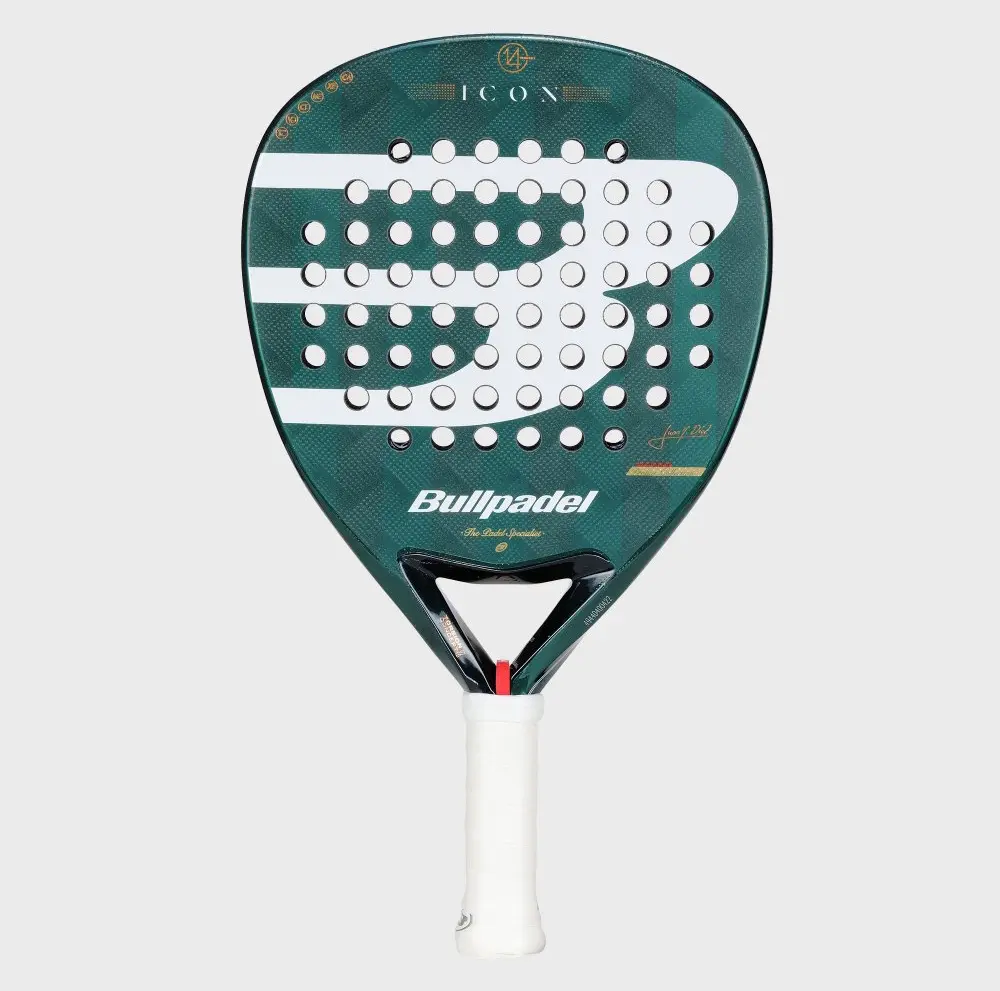
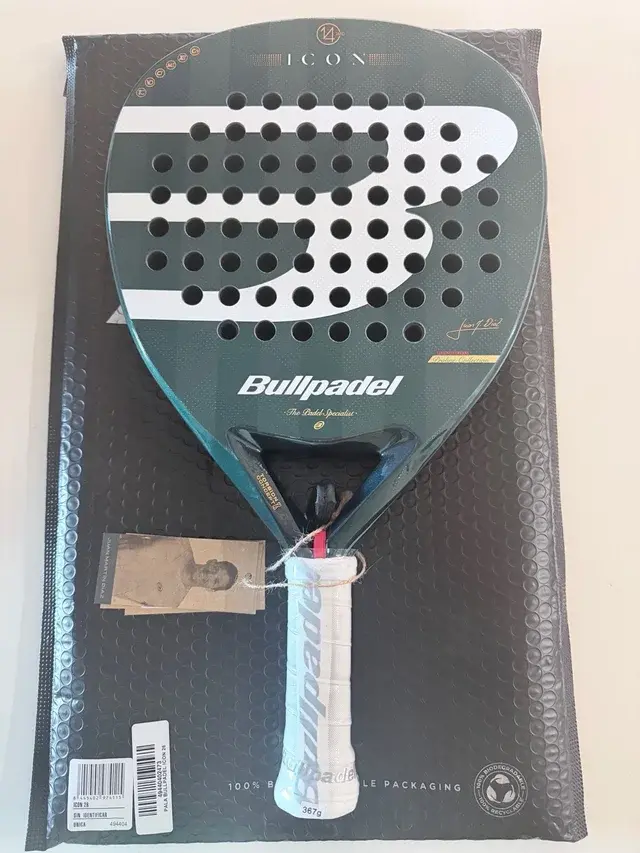
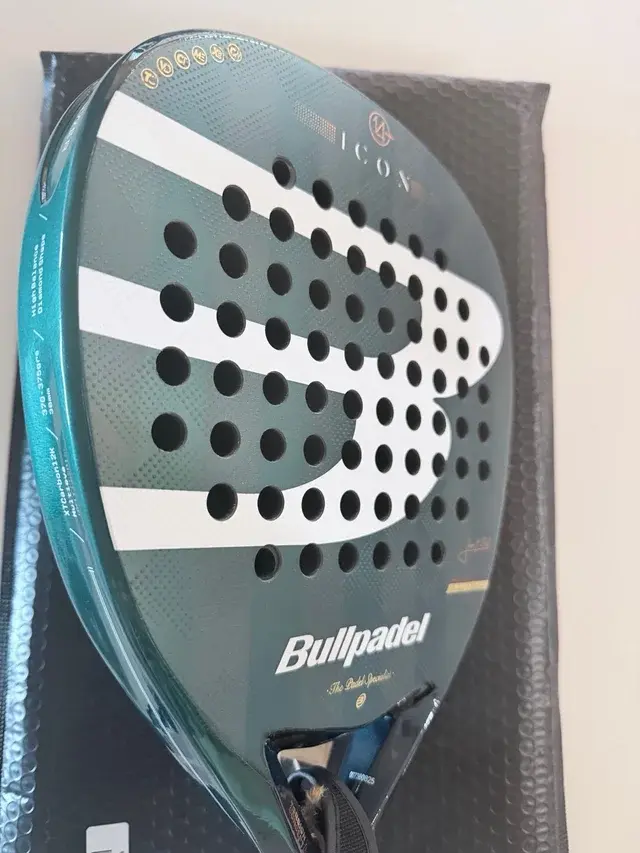
Version and lineup identification
The Icon 2026 functions as Bullpadel's tribute edition honoring Juan Martín Díaz, occupying a distinct position within the 2026 attack segment. The racket sits between the Vertex 05 GEO in progressive power delivery and the Hack 04 in maximum stiffness, targeting players who prioritize overhead output but require defensive competence unavailable in ultra-stiff diamonds. Unlike pro-signature platforms tied to active player feedback cycles, the Icon represents historical positioning rather than current tour-level iteration.
Within Bullpadel's 2026 architecture, the Icon shares construction DNA with the Vertex 05 series through MultiEVA core technology and 12K carbon face material, but diverges through higher balance points and stiffer rebound tuning. The platform does not replace existing models but rather fills a gap between versatile attack options (Vertex 05) and specialist power tools (Hack 04), creating a third pathway for offensive players who value control retention alongside pace generation.
The 2026 edition introduces several evolutionary refinements over previous commemorative releases: centralized string exit point replacing offset placement, updated AVibe anti-vibration positioning concentrated in upper frame zones, and revised heart geometry with 25-degree torsional offset claimed to improve energy transfer efficiency. These changes align with broader Bullpadel 2026 themes emphasizing reduced swing inertia and improved maneuverability despite maintaining traditional diamond proportions.
Technical specifications
| Spec | Value | What it means |
|---|---|---|
| Shape | Diamond (attack-oriented geometry) | High balance, power-oriented |
| Thickness | 38 mm | Thicker = more power and rebound |
| Weight claimed | 365–375 g | Heavier = more stability, lighter = more speed |
| Weight measured | 372 g (as tested, factory configuration) | Heavier = more stability, lighter = more speed |
| Playing weight | 362 g (configured with single overgrip, upper AVibe only) | Heavier = more stability, lighter = more speed |
| Balance claimed | medium (255 mm factory configuration) | Versatile, suits all styles |
| Balance measured | 260 mm (configured setup) | Affects swing feel and power |
| Face | Xtend Carbon 12K | Good stiffness and durability |
| Core | MultiEVA (dual-density EVA construction) | Good balance of control and feel |
| Frame | Carbon reinforcement | Structural rigidity and durability |
| Surface texture | 3D rough texture (micro-dot pattern) | Determines feel and response |
| Hole pattern | Traditional distribution with upper/lower AVibe integration | |
| Heart design | Twisted orientation (25-degree offset for energy transfer) | |
| Grip | Standard size, no Hesacore included (sold separately) | |
| Technologies | MultiEVA core, AVibe anti-vibration system, Tricore frame, Air React Channel | |
| Target player | Upper-intermediate to advanced | |
| Playing style | Offensive baseline with net finishing capabilities |
Construction and materials
The Icon employs Xtend Carbon 12K face construction — Bullpadel's standard premium offering delivering the middle ground between 18K responsiveness and 3K stiffness. The 12K weave provides sufficient rigidity to maximize power transfer during aggressive swings while maintaining enough flex to generate usable feedback during placement shots and touch volleys. The material selection positions the racket firmly in medium-hard territory rather than ultra-stiff, creating a feel signature closer to the Vertex 05 GEO than the Hack 04 despite the similar diamond geometry.
The MultiEVA core construction utilizes Bullpadel's layered density approach: two outer layers with higher compression resistance sandwiching a softer interior zone. This configuration attempts to balance power return with comfort, though the Icon's tuning leans notably toward the performance end of the spectrum. The core responds quickly at medium swing speeds, generating progressive acceleration as impact force increases, but maintains enough dwell time to prevent purely linear rebound behavior that can compromise control during finesse scenarios.
Surface treatment consists of micro-dot 3D roughness distributed across the hitting zone — a less aggressive texture implementation compared to sandpaper finishes used on some competitor attack platforms. The pattern provides spin assistance without creating excessive bite that can complicate clean striking during fast net exchanges. Testers report the texture performs effectively for topspin generation on groundstrokes and overhead finishes while remaining neutral enough for flat volleys and blocking scenarios.
Frame construction incorporates Tricore technology — Bullpadel's standard reinforcement approach using three carbon layers to resist torsional flex — and Air React Channel integration designed to reduce swing inertia. The 2026 Icon introduces a twisted heart orientation at 25 degrees from vertical centerline, claimed to improve energy transfer efficiency by aligning frame flex patterns with typical swing mechanics. Practical impact of this geometry remains difficult to isolate from other construction variables, though the platform does deliver slightly better feel clarity than the 2025 Ionic Power during off-center contacts.
Shape and mould behavior
The Icon utilizes traditional diamond geometry with the sweet spot positioned in the upper third of the face — standard attack-racket architecture prioritizing overhead leverage over defensive usability. The shape creates a head-heavy weight distribution that generates significant momentum during vertical swings, translating into pace output that requires less muscular input than balanced platforms. This leverage advantage becomes most apparent during smashes and aggressive volleys, where the racket's geometry amplifies swing velocity through extended moment arm effects.
The mould proportions sit between the Vertex 05 GEO's wide geometric face and the standard Vertex 05's narrower profile, creating a hitting surface large enough to provide reasonable forgiveness while maintaining the high balance point necessary for power generation. The geometric expansion versus traditional diamonds occurs primarily in the upper zones, widening the effective sweet spot without significantly altering the overall head-heavy character. This expansion improves overhead consistency compared to ultra-compact attack platforms but maintains enough mass concentration to preserve aggressive output capabilities.
Balance distribution at 260 mm (configured) positions the Icon below pure attack specialists like the Hack 04 (higher balance) but above hybrid options like the Neuron 02 (medium balance). This intermediate placement creates a platform that swings noticeably heavier than teardrops during rapid defensive transitions but remains more maneuverable than maximum-power diamonds during net exchanges. The balance point represents deliberate compromise: sufficient leverage for offensive output without creating the unwieldy swing paths that limit all-court playability in extreme head-heavy constructions.
The diamond geometry creates predictable behavioral characteristics during different shot types. Overhead production benefits maximally from the shape, with the high sweet spot and head-heavy distribution generating excellent depth and pace when contact occurs in optimal zones. Baseline groundstrokes require more deliberate positioning to access the elevated sweet spot, creating minor timing challenges compared to hybrid shapes where optimal contact zones sit closer to hand position. Net play receives moderate support — better than ultra-compact diamonds due to the geometric expansion, but less forgiving than round or teardrop options offering larger usable surfaces.
Stiffness, feel, and comfort
The Icon delivers medium-hard tactile character — noticeably firmer than soft EVA platforms but avoiding the unforgiving rigidity of maximum-stiffness attack rackets. The 12K carbon faces paired with MultiEVA core tuning create a rebound profile that responds quickly at medium impact forces while maintaining enough dwell time to generate usable feedback during placement scenarios. This stiffness positioning sits between the Vertex 05's medium feel and the Hack 04's firm response, targeting players who prioritize power return but require some tactile information for shot control.
Pace absorption characteristics reveal the platform's attack-oriented tuning. The racket returns energy efficiently rather than absorbing it, creating a responsive feel during baseline rallies but occasionally generating excessive output during defensive scenarios requiring controlled depth rather than pace. The medium-hard core compresses enough to provide comfort during extended play sessions — multiple testers report acceptable arm-friendliness despite the power-oriented construction — but maintains sufficient rigidity to translate aggressive swings into ball speed without feeling mushy or unresponsive.
Dwell time sits in the medium-short range, creating faster ball release than soft EVA platforms but slower rebound than ultra-stiff carbon-only constructions. This timing window proves sufficient for placement adjustments during volleys and controlled groundstrokes, though players accustomed to softer platforms may initially perceive reduced control due to quicker energy return. The feel signature becomes more progressive as swing speed increases: gentle inputs generate moderate response suitable for touch play, while aggressive acceleration produces notably faster ball output without requiring perfect timing precision.
Vibration management benefits from the AVibe system integration in upper and lower frame zones, though factory configuration includes dampers in both locations that can be removed for weight optimization. The anti-vibration elements reduce high-frequency feedback during off-center contacts without significantly dampening the tactile information necessary for shot awareness. Comfort levels prove adequate for intermediate-to-advanced players with sound technique, though beginners or those with existing arm issues may find the medium-hard feel generates more impact stress than softer alternatives like the Vertex 05 Comfort or the Explode Comfort.
Sweet spot and forgiveness
The Icon provides standard-sized sweet spot dimensions for the attack category — larger than ultra-compact professional diamonds but smaller than hybrid platforms optimizing for maximum usability. The effective hitting zone concentrates in the upper third of the face, creating a high sweet spot position that rewards proper overhead technique but penalizes defensive scenarios requiring rapid racket preparation. Forgiveness levels prove adequate within this zone, with the geometric face expansion versus traditional diamonds widening the lateral margins for off-center tolerance.
Contact quality degrades progressively as impact location moves outside the primary sweet spot, rather than falling off precipitously as occurs in minimum-tolerance attack platforms. Shots struck 2-3 cm from optimal zones maintain reasonable control and depth, though with noticeable power reduction and increased vibration feedback. This forgiveness gradient allows intermediate players to generate acceptable output even during imperfect positioning, distinguishing the Icon from pure specialist tools requiring professional-level consistency.
Vertical sweet spot positioning creates the platform's primary usability challenge. The high placement rewards overhead production and aggressive net volleys but complicates baseline groundstrokes requiring contact zones closer to hand height. Players must consciously prepare the racket higher than natural defensive positions to access optimal striking zones, adding a technical requirement that can slow response times during fast-paced rallies. This vertical bias reinforces the racket's attack-oriented design intent — it performs best when dictating points from offensive positions rather than reacting to opponent pressure.
Off-center contact behavior reveals the Tricore frame reinforcement's influence. Mis-hits near the frame edges generate more controlled responses than basic carbon constructions would allow, maintaining directional stability even when striking quality suffers. The twisted heart geometry appears to contribute marginally to this stability, distributing torsional stress across a wider frame area rather than concentrating flex at a single pivot point. Practical impact remains subtle — the Icon doesn't transform into a high-forgiveness platform — but the stability improvements prove noticeable compared to unreinforced attack rackets when errors occur.
Power and smash behavior
The Icon generates its maximum output during overhead scenarios where the diamond geometry and head-heavy distribution deliver optimal leverage. Smash production reaches the upper tier of accessible platforms — below pure specialist tools like the Hack 04 or Adidas Metalbone HRD+ in absolute ceiling, but significantly above hybrid options like the Neuron 02 or Vertex Hybrid. The power delivery proves notably progressive: moderate swings produce controlled aggression suitable for positioning shots, while maximum acceleration generates genuine finishing pace without requiring perfect timing windows.
The platform's power accessibility represents its most distinctive characteristic compared to traditional high-output diamonds. Testers consistently report achieving strong pace output without maximum effort — described as "easy power" — distinguishing the Icon from ultra-stiff platforms demanding perfect technique and timing to access their performance envelopes. This accessibility derives from the medium-hard core tuning that responds at moderate swing speeds rather than requiring maximum compression forces, paired with the 12K carbon's balanced stiffness that translates energy efficiently without punishing minor timing inconsistencies.
Smash consistency benefits from the geometric face expansion providing a wider lateral sweet spot than compact attack platforms. The margin for error during overhead finishing proves sufficient for intermediate-to-advanced players to generate reliable winners, though professionals may prefer the tighter sweet spots of maximum-control options for precision placement. The 3D texture assists topspin generation during aggressive finishes, helping balls dip into court rather than sailing long — a meaningful advantage for players who tend to over-hit when generating maximum pace.
Power delivery from baseline positions requires more deliberate technique than overhead scenarios. The high sweet spot position demands racket preparation above typical groundstroke contact zones, creating timing challenges during rapid exchanges. Players who successfully access the optimal striking zone generate excellent depth and pace, but those catching balls lower on the face experience noticeable power reduction. This vertical sensitivity reinforces the Icon's design bias toward net-forward attacking styles rather than baseline grinding approaches.
Net play and fast exchanges
The Icon excels during net scenarios where its power characteristics and manageable weight distribution align optimally with volleying mechanics. The medium-hard feel generates quick ball release during blocking scenarios, enabling effective counters against incoming pace without requiring large swing preparation. The 3D texture provides sufficient spin assistance to control ball trajectory during touch volleys and angled placement shots, while remaining neutral enough to avoid interfering with clean striking during flat punch volleys.
Maneuverability at net proves better than expected given the 260 mm balance point and 362 g playing weight (configured). The geometric face expansion provides adequate surface area for rapid exchanges, while the MultiEVA core's responsive tuning enables quick directional changes without feeling sluggish. Testers report comfortable performance during fast-paced volley battles, though some note the platform requires more wrist strength than lighter hybrid options when executing repeated rapid-fire exchanges. The Air React Channel technology appears to contribute marginally to swing speed, though isolating this effect from overall weight distribution remains challenging.
Depth generation during medium-pace volleys requires minimal effort — the head-heavy distribution and responsive core combine to produce natural ball penetration without deliberate acceleration. This effortless profundity proves advantageous during positioning exchanges where maintaining court depth pressures opponents without excessive risk. The progressive power delivery allows players to modulate output through swing adjustment rather than requiring perfect racket-face angles, creating a forgiving feel during varied-pace net play.
Blocking performance against maximum incoming pace reveals mixed characteristics. The medium-hard feel provides sufficient control to redirect power effectively, though the responsive core tuning can generate excessive output if players fail to decelerate the racket head adequately. Off-center contacts during high-speed blocking create noticeable vibration and directional instability, though less severely than ultra-stiff attack platforms would exhibit. The Icon performs best at net when players maintain positioning in optimal zones rather than scrambling for emergency defensive blocks.
Stability on off-center contact
The Icon delivers standard stability performance for the attack category — adequate torsional resistance within the primary sweet spot but noticeable degradation during peripheral contacts. The Tricore frame reinforcement provides three-layer carbon construction designed to resist twisting forces, generating measurable improvements over basic single-layer alternatives but falling short of maximum-stability platforms using additional reinforcement technologies. During centered strikes, the platform maintains excellent directional control and energy transfer efficiency.
Off-center contacts reveal the platform's attack-oriented compromise between weight optimization and stability maximization. Strikes landing 3-4 cm from the sweet spot generate noticeable racket rotation and directional deviation, particularly during high-pace scenarios where impact forces exceed the frame's torsional resistance threshold. The twisted heart geometry appears to distribute these forces more effectively than traditional vertical orientations, reducing — but not eliminating — the stability penalties of peripheral contact. Players with consistent striking mechanics experience minimal issues, while those prone to mis-hits face meaningful control challenges.
Vertical stability proves slightly better than lateral resistance due to the diamond geometry's structural characteristics. The elongated shape naturally resists flex along the long axis, creating better forgiveness for high/low mis-hits compared to inside/outside errors. This vertical bias aligns well with overhead scenarios where contact location variance occurs primarily in the up/down dimension, but creates challenges during lateral reaching situations where the platform's resistance to side-to-side twisting proves less robust.
Frame vibration during off-center impacts remains noticeable despite AVibe integration. The anti-vibration system reduces high-frequency feedback but doesn't eliminate the tactile and acoustic signals indicating imperfect contact. This feedback proves useful for technique refinement — players receive clear information about striking quality — though it may prove uncomfortable during extended sessions involving frequent mis-hits. The 12K carbon faces transmit more impact feedback than softer materials would allow, creating a direct feel that some players interpret as harsh while others value for shot awareness.
Practical on-court takeaways
The Icon functions most effectively as an attack-first platform for players who prioritize overhead finishing but require better all-court competence than pure specialist diamonds provide. The racket's power ceiling reaches 80-85% of maximum-output options like the Hack 04 while delivering notably superior defensive capabilities and baseline usability. This trade-off proves optimal for upper-intermediate to advanced players whose attacking consistency doesn't yet justify the control sacrifices inherent in ultra-stiff platforms.
Playing style compatibility centers on offensive baseline approaches transitioning to net finishing. The platform generates sufficient power from groundstroke positions to create attacking opportunities, though not with the effortless depth of true baseline power rackets. The sweet spot rewards aggressive forward positioning where overhead mechanics can access optimal contact zones, creating a natural tactical bias toward net-forward point construction. Defensive capabilities prove adequate for maintaining rallies under pressure, though players requiring maximum defensive output should consider hybrid alternatives.
Weight configuration significantly impacts usability windows. The factory 372 g specification with full AVibe integration creates a noticeably heavier swing than the 362 g configured setup tested extensively in field conditions. Removing lower AVibe elements and minimizing grip build-up reduces swing inertia measurably, improving maneuverability during rapid exchanges without sacrificing meaningful stability. This configuration flexibility allows players to tune the platform toward their strength levels and playing preferences, though extreme weight reduction compromises the head-heavy leverage that generates the Icon's power characteristics.
Technical demands remain moderate for the attack category. The platform doesn't require professional-level consistency to generate acceptable performance, though it rewards sound mechanics more than forgiving hybrid options. Overhead technique proves most critical — players must prepare rackets high enough to access the elevated sweet spot consistently. Net positioning and footwork take priority over pure power generation, as the racket provides adequate pace output when players can establish favorable court positions enabling proper swing mechanics.
Comparison within the brand lineup
The Icon occupies a distinct position within Bullpadel's attack architecture: more aggressive than the Vertex 05 standard but more controlled than the Hack 04, with unique medium-hard tuning that differs from both endpoints. Players seeking maximum versatility within diamond geometry should examine the Vertex 05, while those prioritizing pure power should consider the Hack 04 or Vertex 05 GEO. The Icon serves players who find the Vertex 05 insufficiently aggressive but recognize the Hack 04's control sacrifices exceed their consistency capabilities. The platform shares construction methods with the Vertex series but diverges through stiffer tuning and higher balance optimization, creating a bridge option rather than direct alternative to existing models.
Comparison with other brands
The Icon differentiates through its medium-hard tuning that bridges traditional attack stiffness and hybrid forgiveness — most competitor diamonds commit more decisively to either maximum power (Metalbone, Extreme Pro) or enhanced comfort (Technical Viper). The 12K carbon selection positions the Icon between softer 18K options prioritizing feel and harder 3K/UD constructions maximizing energy return, creating a middle-ground approach that sacrifices specialization for broader usability. Players comparing attack platforms should consider whether they value the Icon's progressive power delivery and control retention or prefer competitor models offering higher absolute ceilings with corresponding control trade-offs.
Technical positioning
The Icon targets the specific player archetype seeking attack-category power output without accepting the control and defensive sacrifices inherent in maximum-stiffness specialist tools. The platform serves as progression equipment for intermediate players developing overhead consistency who require more aggression than hybrid options provide, and as primary equipment for advanced players whose attacking styles benefit from power assistance but whose consistency levels don't justify ultra-stiff platforms' unforgiving characteristics.
Skill level requirements center on intermediate-to-advanced capabilities rather than professional-level consistency. The medium-hard feel and standard-sized sweet spot demand sound fundamental technique — players must prepare rackets properly and contact balls in optimal zones — but the platform forgives minor technical imperfections better than specialist attack tools. Overhead mechanics prove most critical, as accessing the high sweet spot consistently determines whether players can exploit the Icon's primary strength. Defensive technique matters less given the platform provides adequate but not exceptional baseline capabilities.
Playing style compatibility emphasizes aggressive baseline approaches transitioning to net finishing rather than pure baseline grinding or defensive counterpunching. The racket generates sufficient power to create attacking opportunities from mid-court but lacks the effortless depth of true power-baseline platforms. The head-heavy distribution and responsive core encourage forward court positioning where overhead leverage maximizes, creating tactical bias toward net-forward point construction. Players who prefer staying back and grinding from baseline positions should examine hybrid alternatives offering better defensive support.
Physical demands remain moderate despite the attack classification. The 362 g playing weight (configured) and 260 mm balance create noticeable swing inertia but avoid the extreme values that limit accessibility to strength-trained players. Wrist and forearm endurance become relevant during extended sessions, though less severely than ultra-heavy or ultra-head-heavy alternatives. The platform suits players with average-to-good physical conditioning rather than requiring exceptional strength or endurance capabilities.
Strategic positioning within equipment progression places the Icon as a bridge between hybrid control platforms and specialist attack tools. Players typically arrive at this racket after outgrowing versatile teardrops but before developing the consistency necessary for maximum-output diamonds. The platform serves this transitional phase effectively, providing attack capabilities that reward improving technique while maintaining enough forgiveness to avoid punishing the inevitable inconsistencies of developing players.
Common questions
The Icon targets upper-intermediate to advanced players who have developed consistent overhead mechanics but haven't yet reached professional-level striking precision. The platform requires sound fundamental technique to access optimal contact zones consistently, particularly regarding high racket preparation necessary to reach the elevated sweet spot. Intermediate players with developing attacking styles find the Icon provides meaningful power assistance without the unforgiving feel of ultra-stiff specialist tools, while advanced players appreciate the control retention alongside aggressive output. Beginners should avoid this platform due to the technical demands and power-oriented tuning that can reinforce poor mechanics, while true professionals may prefer maximum-output specialists offering higher absolute ceilings despite control trade-offs.
The Icon shares significant performance DNA with the 2025 Ionic Power — similar power accessibility and progressive delivery — but diverges through stiffer core tuning and improved maneuverability. Testers report the Icon feels notably firmer than the Ionic Power's softer EVA construction, generating quicker ball release and higher maximum output while sacrificing some comfort. The 2026 Icon's revised balance optimization and heart geometry improvements create better swing speed despite similar claimed weights, with the 260 mm configured balance proving more maneuverable than the Ionic Power's distribution. The Icon delivers approximately 10-15% more power output while maintaining 85-90% of the Ionic Power's control characteristics, creating a trade-off most non-elite players prefer. Players who valued the Ionic Power's softer feel should test the Icon carefully before assuming direct replacement suitability.
Intermediate players with average-to-good physical conditioning can manage the Icon's 362 g playing weight (configured) and 260 mm balance, though those accustomed to lighter hybrid platforms will experience noticeable swing inertia increases during rapid transitions. The platform's maneuverability sits in the moderate range for attack rackets — better than ultra-heavy diamonds but more demanding than versatile teardrops. Configuration flexibility through AVibe removal and minimal grip build-up enables weight optimization, with some testers successfully reducing playing weight to 355-360 g range without sacrificing meaningful performance. Wrist and forearm endurance become relevant during extended sessions, suggesting gradual adaptation periods for players transitioning from lighter equipment. The head-heavy distribution requires deliberate technique during defensive scenarios but provides beneficial leverage during overhead finishing that partially compensates for the added mass.
The 25-degree twisted heart orientation represents Bullpadel's attempt to improve energy transfer efficiency by aligning frame flex patterns with typical swing mechanics, though isolating this feature's practical impact proves challenging given the multiple construction variables. Testers note the Icon delivers marginally better feel clarity during off-center contacts compared to the 2025 Ionic Power, suggesting the revised geometry distributes torsional stress more effectively across wider frame areas. The stability improvements remain subtle rather than transformative — the Icon doesn't achieve maximum-stability performance levels — but the reduced vibration and improved directional control during peripheral strikes prove noticeable in direct comparison. Players shouldn't select the Icon specifically for twisted heart benefits, but the geometry contributes positively to the overall performance envelope as one element among several refinements.
Field testing reveals the Icon performs best for most players when configured at 360-362 g playing weight through selective AVibe removal and minimal grip build-up. Removing lower frame AVibe elements while retaining upper dampers reduces swing inertia measurably without sacrificing meaningful stability or comfort, with the upper positioning proving more effective for vibration management during overhead scenarios where most power generation occurs. Single overgrip application rather than multiple layers limits handle weight accumulation, though players with larger hand sizes may require additional grip thickness for comfort. Avoiding protector tape eliminates unnecessary head weight while accepting minor cosmetic risk. This optimized configuration typically achieves 260 mm balance and 360-362 g total weight, improving maneuverability 5-10% versus factory setup while maintaining the head-heavy distribution necessary for power generation.
Players with existing tennis elbow, wrist tendonitis, or general arm sensitivity should approach the Icon cautiously despite its reasonable comfort scores for the attack category. The medium-hard feel provides better arm-friendliness than ultra-stiff alternatives but generates more impact stress than soft EVA platforms specifically designed for maximum comfort. The MultiEVA core's dual-density construction and AVibe integration reduce vibration compared to unreinforced attack rackets, creating acceptable comfort for healthy players with sound technique. However, those prone to arm issues typically require softer platforms like the Explode Comfort, Vertex 05 Comfort, or hybrid options using gentler materials. The Icon's responsive core tuning and 12K carbon faces transmit meaningful impact feedback that proves beneficial for technique awareness but potentially problematic for players requiring maximum pace absorption to prevent joint stress accumulation.
The Icon's 362 g playing weight and head-heavy distribution provide adequate wind resistance for controlled play during moderate breeze conditions, though the geometric face expansion creates more surface area vulnerable to lateral gusts compared to compact attack platforms. The platform maintains reasonable stability during overhead scenarios where the diamond geometry's aerodynamic profile proves beneficial, but baseline groundstrokes require deliberate swing adjustments to compensate for wind effects on the larger hitting surface. Defensive lobs and high trajectory shots prove more challenging than compact rackets would allow, with wind interference creating meaningful depth control difficulties. The Icon performs acceptably in typical outdoor conditions but players regularly facing strong coastal or mountain winds may prefer denser, more compact alternatives offering superior stability in challenging weather.
Technical performance score
Ten categories, each 0–10. Methodology →
- Maneuverability and handling5.0
- Net performance under pace8.0
- Control and placement precision7.5
- Defensive output and depth access6.5
- Off-center stability and torsional resistance7.0
- Sweet spot usability7.0
- Spin generation potential7.0
- Power ceiling8.5
- Power accessibility8.0
- Comfort and impact feedback7.0
Final verdict — Bullpadel Icon scores 74/100. A competent mid-range option with high power ceiling and attacking character, well suited to developing and recreational players.