Oxdog Ultimate Pro Light 2026
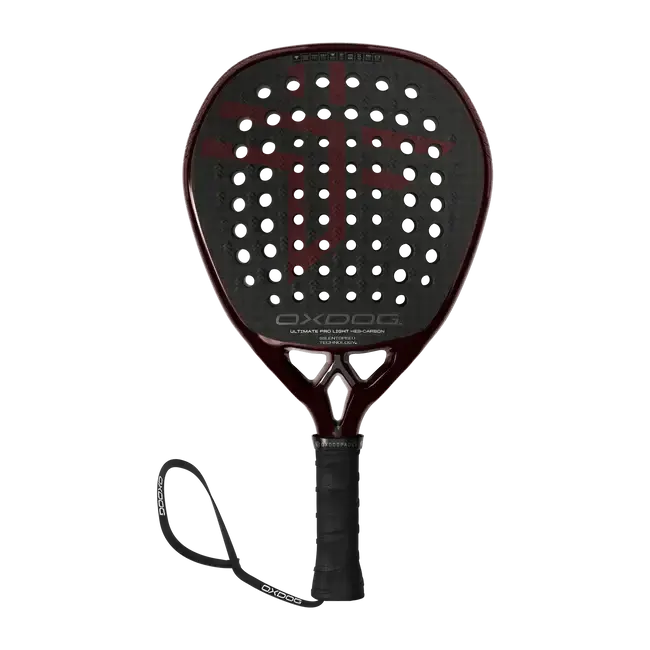
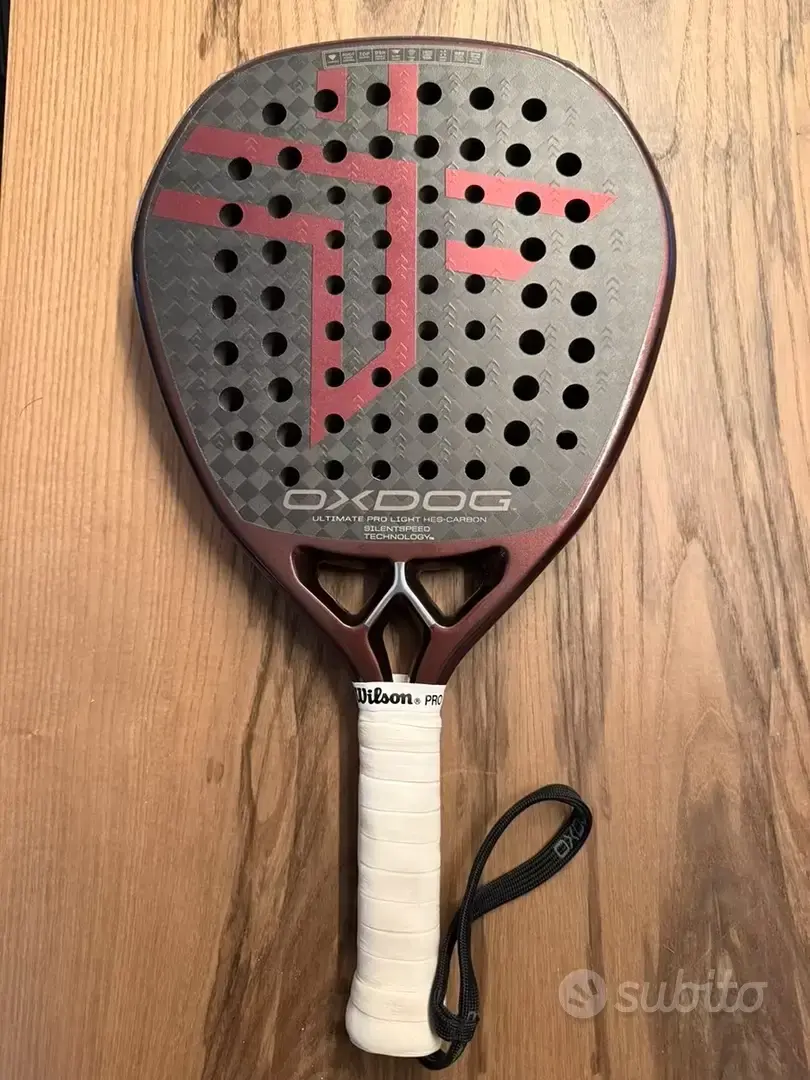
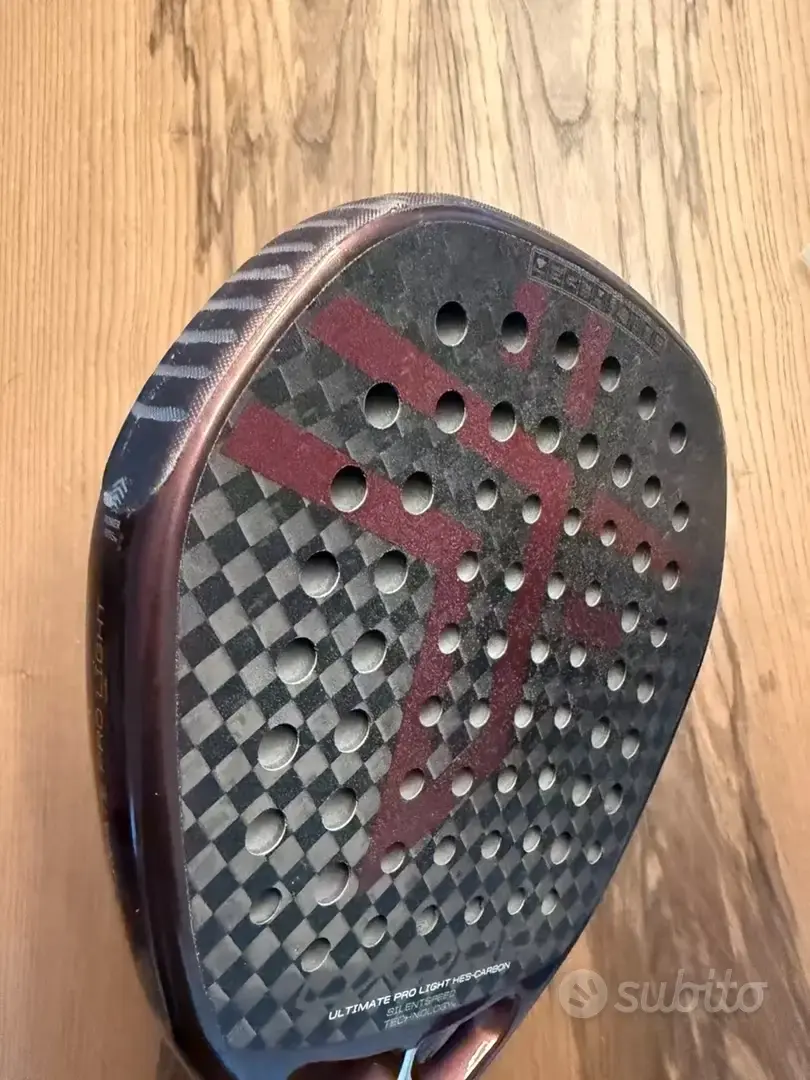
Version and lineup identification
Within the Oxdog 2026 lineup, the Ultimate Pro Light sits inside the Ultimate Series, the brand’s most offensive family built around diamond shapes, elevated balance, and stiff carbon response. Compared to the standard Ultimate Pro, the Light version uses the same mould, materials, and core configuration but lowers the static weight by approximately 15 grams, shifting the playing feel toward speed and maneuverability rather than mass-driven power.
This places Ultimate Pro Light below the Ultimate Pro in terms of raw stability and smash inertia, but clearly above Oxdog’s hybrid or control-leaning models in terms of attacking intent. It is best described as a speed-power racket, not a mass-power one. Players transitioning from heavier diamond rackets often view it as a way to retain offensive geometry while reducing physical load on the shoulder and forearm.
Within the broader Ultimate range, Pro Light is the most agile and least forgiving option. It rewards fast hands and proactive positioning, particularly in quick exchanges and counter-attacks, but offers limited assistance on passive shots or defensive retrievals.
Technical specifications
| Spec | Value | What it means |
|---|---|---|
| Shape | Diamond | High balance, power-oriented |
| Balance | Head-heavy (adjustable via RBS system) | Affects swing feel and power |
| Weight | ~350 g (without grip customization) | Heavier = more stability, lighter = more speed |
| Weight customization | Removable end-cap weight (~8 g) | Heavier = more stability, lighter = more speed |
| Frame material | HES-Carbon | Stiff, precise and powerful |
| Face material | HES-Carbon | Stiff, precise and powerful |
| Core | Medium-plus EVA (performance-oriented density) | Good balance of control and feel |
| Surface finish | Rough / textured for spin assistance | Determines feel and response |
| Hole pattern | DSH – Double Size Holes | |
| Vibration dampening | Vibradamp system (4 silicone inserts) | |
| Target level | Upper-intermediate to advanced players | Ideal skill level for this racket |
| Intended playstyle | Fast offensive play, net dominance, active acceleration |
Construction and materials
The Ultimate Pro Light 2026 uses Oxdog’s HES-Carbon construction throughout both frame and face, resulting in a notably stiff and reactive structure. This material choice is central to the racket’s dry impact feel and rapid energy transfer. Compared to softer carbon layups, HES-Carbon produces shorter dwell time and a more linear rebound, which enhances precision but reduces forgiveness.
Structural stiffness is further reinforced by PowerRibs integrated into the frame. These ribs increase torsional rigidity and help maintain stability during high-speed impacts, particularly on volleys and overhead shots. However, due to the reduced overall mass of the Light version, this added stiffness cannot fully compensate for off-center hits, especially when the removable weight is not installed.
The DSH (Double Size Holes) pattern is designed to improve response outside the sweet spot by enlarging specific perforations. In practice, this system offers marginal assistance but does not significantly expand the usable hitting area. The underlying stiffness and diamond geometry remain the dominant factors shaping forgiveness.
Vibration management is handled by the Vibradamp system, with four silicone inserts placed beneath the grip. This effectively filters high-frequency vibrations and keeps impact shock at a moderate level despite the stiff construction. The resulting feel is muted rather than harsh, but still very firm and feedback-oriented.
Shape and mould behavior
The diamond mould of the Ultimate Pro Light 2026 is clearly tuned for offensive intent, with a high balance point and a sweet spot positioned toward the upper portion of the face. This geometry supports aggressive overhead play and fast finishing shots when timing and contact are precise.
In motion, the reduced static weight allows the head-heavy shape to feel significantly more manageable than traditional power diamonds in the 370–375 g range. Swing initiation is quick, and the racket accelerates easily through the contact zone. This makes it particularly effective in fast-paced rallies and situations where preparation time is limited.
However, the same mould characteristics amplify performance gaps between centered and off-centered contact. The upper sweet spot delivers clean, powerful output, while lateral deviations lead to a sharp loss of stability and depth. The mould does not mask technical imperfections, and its behavior strongly favors players with consistent mechanics and accurate timing.
Overall, the shape prioritizes speed-driven offense rather than forgiving power. It is optimized for players who actively attack the ball and capitalize on rapid transitions, rather than those seeking a wide, tolerant hitting area.
Stiffness, feel, and comfort
The Ultimate Pro Light 2026 sits firmly in the medium-to-stiff category, both in static flex and dynamic response. The combination of HES-Carbon faces and a performance-oriented EVA core produces a short dwell time and a highly direct connection between swing input and ball output. This translates into excellent feedback clarity, but also increases the technical demands placed on the player.
Impact feel is best described as dry and muted rather than soft. There is minimal trampoline effect, and the racket does not absorb energy to prolong contact. Instead, it reflects energy quickly and cleanly, which benefits precise volleys and controlled acceleration shots. Players who prefer a cushioned or elastic sensation will likely find the response too firm, especially during extended defensive rallies.
In terms of comfort, vibration levels are well controlled despite the stiffness. The Vibradamp system under the grip effectively filters high-frequency shock, keeping arm fatigue within reasonable limits for a Pro-level racket. However, comfort is achieved through vibration reduction rather than impact softness. The racket remains physically demanding and is better suited to players with sound technique and conditioning rather than those seeking injury prevention through soft materials.
Sweet spot and forgiveness
Sweet spot size is compact to medium, with a clearly defined optimal contact zone located in the upper central portion of the face. When the ball is struck cleanly in this area, the racket delivers stable output, predictable trajectories, and consistent depth. This precision is one of its strengths, but it comes at the cost of forgiveness.
Outside the sweet spot, performance drops off quickly. Lateral off-center hits result in a noticeable reduction in ball speed and depth, while lower-face contact tends to produce flatter, shorter shots. Although the DSH hole pattern offers some marginal assistance, it does not significantly expand the effective hitting area.
Forgiveness is therefore below average for a Pro-level racket and clearly below hybrid or control-oriented models. The Ultimate Pro Light rewards accuracy and penalizes imprecision. Players with inconsistent contact will experience fluctuating shot quality, particularly during defensive phases or rushed situations.
Power and smash behavior
Power generation on the Ultimate Pro Light 2026 is conditional rather than automatic. The racket does not supply free power on slow or passive swings. Instead, it requires active acceleration to unlock its offensive potential. When swing speed is high and contact is centered, the racket produces strong ball velocity with a clean, linear launch.
Overhead shots benefit from the diamond geometry and elevated balance, but overall smash power is more speed-based than mass-based. Flat smashes travel fast but lack the heavy, penetrating weight seen in higher-mass power rackets. Kick smashes and topspin finishes are more consistent, with good spin engagement and controlled descent.
Power accessibility is moderate. Skilled players can generate sufficient finishing power without over-exertion, but the racket does not compensate for incomplete swings or poor timing. In practical terms, Ultimate Pro Light favors fast, technically precise attackers rather than players relying on sheer racket mass to finish points.
Net play and fast exchanges
Net play is one of the strongest performance areas of the Ultimate Pro Light 2026. The reduced static weight combined with a head-heavy geometry allows the racket to feel exceptionally quick through preparation and recovery, which is critical in high-tempo exchanges. Reaction time is noticeably shorter compared to heavier diamond rackets, giving the player an advantage in counter-volley situations.
Punch volleys are crisp and accurate when contact is clean. The stiff face prevents unwanted deformation, keeping trajectories flat and controlled even at high pace. In rapid exchanges, the racket favors active hands and compact swings, allowing players to redirect the ball with precision rather than relying on blocking mass.
However, the same speed-oriented behavior requires constant engagement. Passive blocks tend to drop short unless the player adds intent to the shot. This reinforces the racket’s identity as a tool for proactive net players rather than those who prefer absorbing pace.
Stability on off-center contact
Stability on off-center contact is limited, particularly laterally. While the PowerRibs frame design improves torsional rigidity relative to softer constructions, the reduced mass of the Light version means that mis-hits are felt immediately in both feedback and ball outcome.
Lateral off-center contact produces a noticeable twist and a sharp reduction in depth. Vertical mis-hits below the sweet spot also lead to flatter, less penetrating shots. Installing the removable weight at the butt cap improves overall stability slightly by lowering the effective balance, but it does not fundamentally change the racket’s tolerance profile.
Compared to heavier Pro power rackets, the Ultimate Pro Light demands more precise contact to maintain rally quality. Stability is sufficient for confident hitters but unforgiving for players whose timing or positioning breaks down under pressure.
Practical on-court takeaways
In real match conditions, the Ultimate Pro Light 2026 behaves as a high-speed, high-precision offensive racket. It excels when the player stays active, maintains good footwork, and consistently accelerates through the ball. Fast transitions, aggressive net positioning, and counter-attacking scenarios highlight its strengths.
Conversely, the racket exposes technical weaknesses. Defensive scrambling, late preparation, or passive shot selection quickly reveal the limitations of its small sweet spot and limited forgiveness. This makes the racket polarizing: players with fast hands and clean mechanics will appreciate its responsiveness, while others may find it overly demanding.
Ultimately, the Ultimate Pro Light 2026 is best viewed as a specialized tool rather than a universal solution. It rewards speed, precision, and proactive play, offering little assistance when those elements are missing.
Comparison within the Oxdog lineup
Within Oxdog’s 2026 range, the Ultimate Pro Light is best positioned as a speed-first power diamond: it preserves the offensive geometry and stiff HES-Carbon response of the Ultimate family, but reduces static weight to improve hand speed, preparation time, and overall maneuverability.
Compared to the Ultimate Pro (standard), the Light version sacrifices mass-driven stability and “free” penetration on overheads in exchange for faster acceleration and lower physical load. The standard Ultimate Pro is generally the more complete option for players who win points through heavy overhead pressure and want more stability when contact is imperfect. Ultimate Pro Light is the choice for players who want the same attacking intent but prefer a quicker, more reactive feel—especially at the net.
Relative to Oxdog’s more forgiving hybrid/control models, Ultimate Pro Light remains distinctly more demanding. Those rackets typically deliver a wider usable sweet spot and easier defensive depth. Ultimate Pro Light’s performance window is narrower, but when contacted cleanly it offers sharper output and a more aggressive profile.
Within the Ultimate family specifically, the Light version is most attractive to players who already like the Ultimate mould but find typical 365–375 g diamonds too slow, too tiring, or too shoulder-heavy. It is a specialist tool: excellent for fast hands and proactive positioning, less suited to players who rely on the racket to stabilize imperfect contact.
Comparison with other brands
Compared to other brands’ “fast power” rackets, Ultimate Pro Light 2026 behaves like a precision-driven attacker rather than a forgiving finisher.
Against Babolat Air Viper, the concept is similar: lightweight, fast, and designed for aggressive acceleration. The difference is feel and tolerance. Ultimate Pro Light is typically drier and more punishing off-center, while Air Viper tends to offer slightly easier power access and a more elastic response. If you want crisp feedback and pure linear output, Oxdog fits; if you want more assistance and comfort, Air Viper often feels friendlier.
Versus classic heavy diamonds like Bullpadel Vertex-type power rackets, the Oxdog’s advantage is speed and reaction time, especially at the net. The trade-off is stability: heavier diamonds often keep depth and pace more reliably on imperfect contact. Ultimate Pro Light wins in fast exchanges; heavier power rackets win when you need mass to carry the ball through the court.
Compared to demanding power tools such as Siux Fenix Pro-style attackers, the Oxdog is usually faster and easier to whip through the ball, but less stable when contact drifts away from the sweet spot. Fenix-type rackets may offer more “finish” when hit cleanly, while Ultimate Pro Light offers more speed-based pressure and counter-attacking precision.
Technical positioning
The Oxdog Ultimate Pro Light 2026 is technically positioned as a high-speed offensive diamond for players who generate power through acceleration rather than mass. Its defining strengths are rapid handling, crisp net behavior at pace, and precise linear response when contact is centered in the upper sweet spot.
Its limitations are equally clear: a compact sweet spot, limited off-center stability, and modest power accessibility for passive or defensive play. The racket will not carry the ball for you—depth and penetration must be created actively, which narrows the target audience to technically confident players with fast hands and consistent contact.
Technical performance score
Ten categories, each 0-10. Methodology →
- Maneuverability and handling8.5
- Net performance under pace7.5
- Control and placement precision7.0
- Defensive output and depth access6.5
- Off-center stability and torsional resistance6.0
- Sweet spot usability6.5
- Spin generation potential7.5
- Power ceiling7.0
- Power accessibility6.5
- Comfort and impact feedback7.0
Final verdict — Oxdog Ultimate Pro Light scores 71/100. A competent mid-range option with balanced performance across categories, well suited to developing and recreational players.
Common questions
Peak power is comparable, but the way it is produced is different. The Ultimate Pro Light behaves like a speed-driven diamond: it rewards fast acceleration and clean, high contact with a very direct rebound. The Air Viper typically feels more elastic, so many players perceive it as giving more “free” output on medium swings. In match terms, the Oxdog can hit just as hard when you are fully committed and centered, but it is less forgiving when contact drifts away from the sweet spot. If you win points by accelerating aggressively and you like a dry, linear response, the Pro Light will feel more precise. If you rely on rebound assistance and want easier power in defensive or half-speed situations, Air Viper tends to feel more accessible.
Yes, and this is the defining limitation mentioned most often. The sweet spot is compact and concentrated in the upper-central face area, which fits the diamond geometry and head-heavy intent. Clean contact produces excellent ball speed and predictable trajectories, but even moderate lateral mis-hits reduce depth and pace noticeably. Oxdog’s DSH drilling pattern is designed to improve off-center response, but it does not change the core reality of the racket: this is a precision tool, not a forgiving platform. If your contact quality drops under pressure, you will feel the difference immediately in rally depth and stability.
For most intermediate players, no. The racket is physically light, but it is technically demanding because it does not stabilize imperfect contact and it does not create depth automatically. Many players at that level benefit more from a model with a wider usable hitting area and easier defensive output, especially when the point becomes chaotic. The Pro Light makes sense only for advanced intermediates who already strike the ball consistently, accelerate confidently, and spend a lot of time at the net where its speed advantage is maximized.
Functionally, it is the same racket. Community discussion and retailer specs align on the idea that 2026 is a cosmetic refresh rather than a structural redesign. That means you should expect the same stiffness category, the same “dry/muted” impact feel, and the same sweet spot behavior. If you already know you like the Ultimate Pro Light concept, buying 2026 versus 2025 is mainly about availability and design preference, not performance.
It changes feel and balance more than it changes the fundamental performance profile. Adding the weight typically makes the racket feel slightly more stable through contact and can reduce the sensation of head “nervousness,” especially if you add one or two overgrips. Removing it makes the racket even faster and more reactive, which some players love at the net, but it does not solve the key limitation: it does not meaningfully increase the sweet spot size or make off-center hits tolerant. Think of the weight system as a fine-tuning tool for handling and stability, not as a transformation.
Within Oxdog’s range, the Ultimate Pro Light is usually perceived as one of the most aggressive and least forgiving options because it combines a diamond mould with a stiff carbon response in a low-mass format. More accessible models in the lineup tend to provide a wider usable sweet spot and easier depth in defense, while the Pro Light prioritizes speed, quick preparation, and sharp acceleration. In practical terms, it suits players who want to play fast and take the ball early, rather than those who want the racket to “carry” the ball when the swing is incomplete.
It is generally manageable, but it is not a comfort-first racket. The vibration filtering helps keep harsh shock under control, yet the stiff response and compact sweet spot mean mis-hits are clearly felt and can become fatiguing over long sessions. Players who are sensitive to elbow or shoulder stress often prefer a more forgiving platform, because forgiveness reduces the frequency and severity of off-center impact feedback. If you train often, play in colder conditions, or have a history of arm discomfort, the Pro Light can still work, but only if your technique is stable enough to keep contact clean most of the time.