Xcalion H1 Max Review
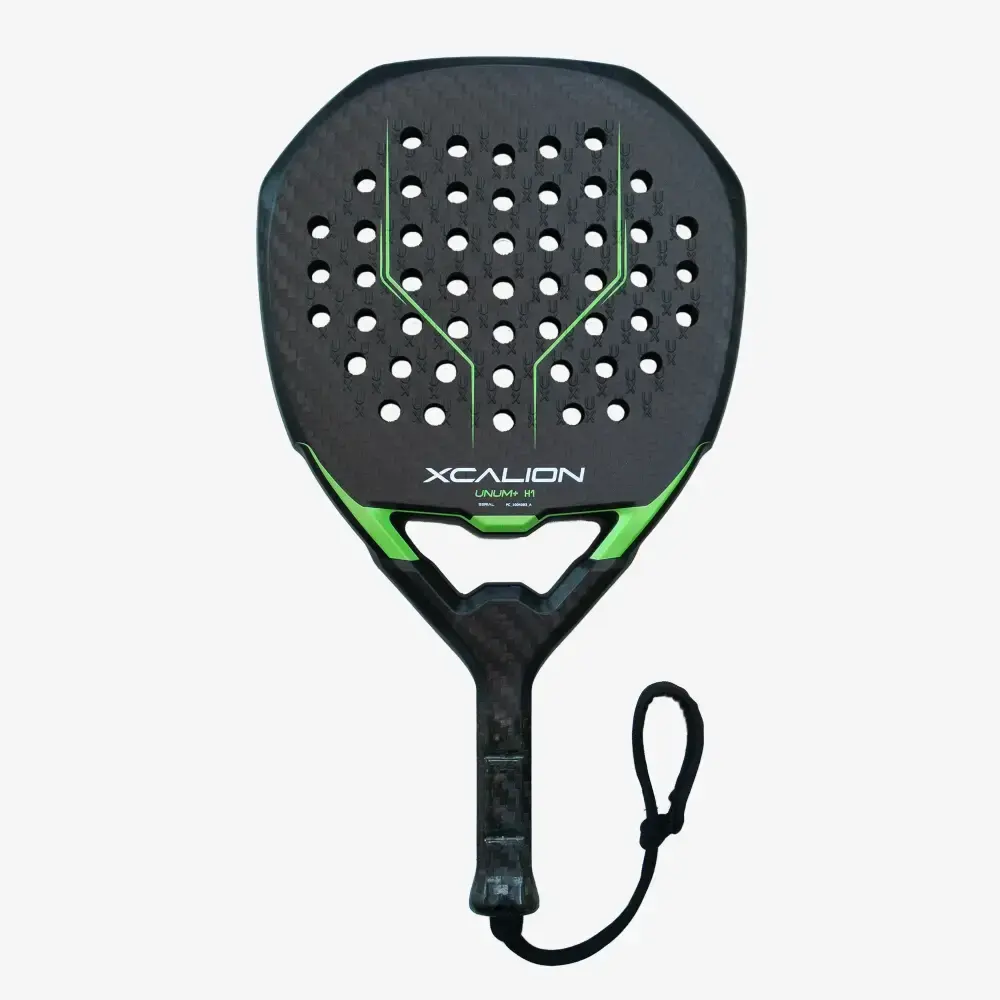
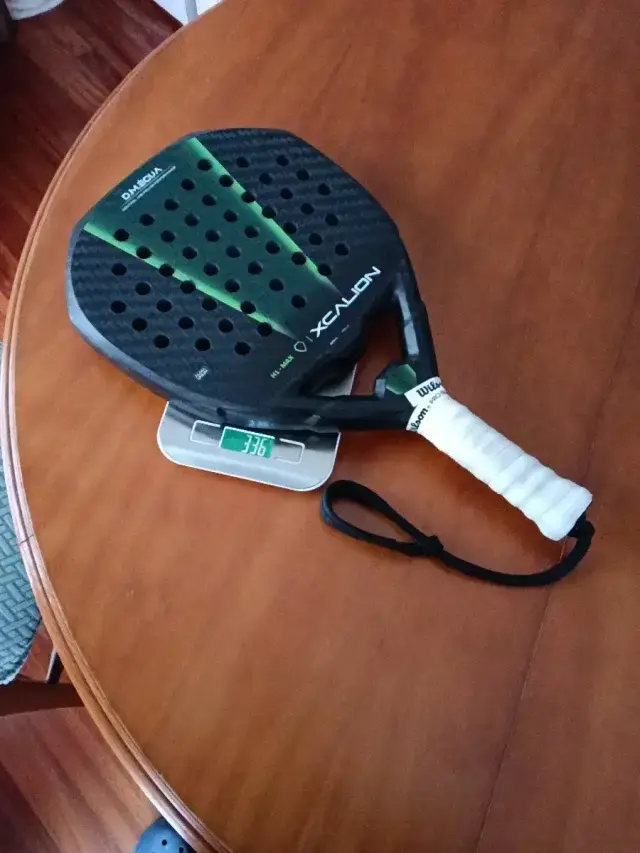
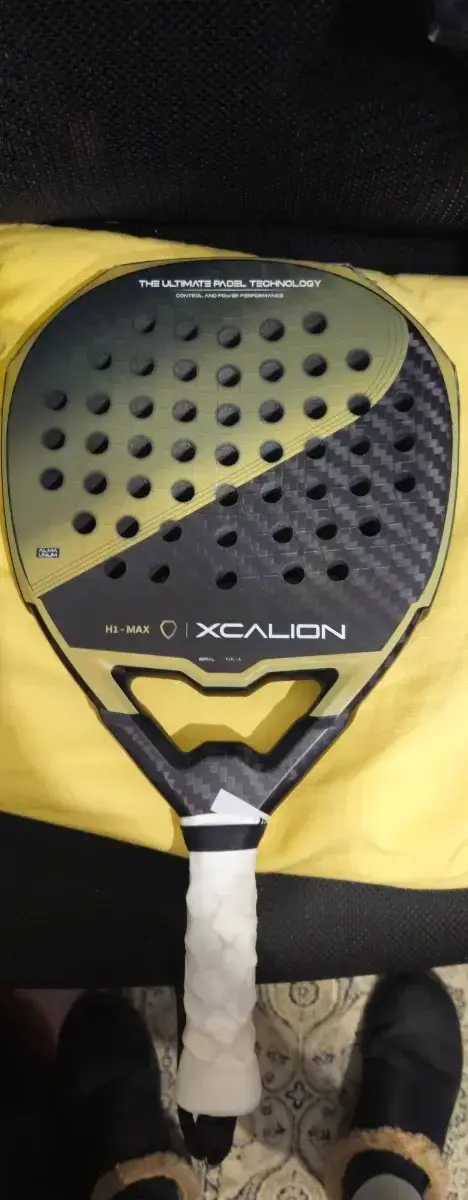
Version and lineup identification
The Xcalion H1 Max is part of a small, tightly controlled product lineup produced in limited batches in Madrid. Unlike mass-market rackets, it is not derived from a multi-tier platform with simplified consumer variants. The H1 Max represents the brand’s high-stiffness, attack-focused concept, positioned above lighter or more elastic alternatives within the Xcalion range.
Production scale is intentionally small, allowing for customization options such as personalized graphics and player name printing. This reflects both the boutique nature of the brand and a manufacturing process that prioritizes material quality and consistency over volume. In the broader context of the market, the H1 Max competes functionally with professional-level attack rackets, while remaining significantly lower in price than most flagship models from major brands.
Technical specifications
| Spec | Value | What it means |
|---|---|---|
| Shape | Attack / diamond-leaning geometry | High balance, power-oriented |
| Thickness | 38 mm | Thicker = more power and rebound |
| Weight range (real feel) | exceptionally light, comparable to junior rackets | Heavier = more stability, lighter = more speed |
| Balance (estimated) | high, head-heavy | More power, less maneuverability |
| Face material | ultra-stiff carbon composite | Stiff, precise and powerful |
| Core | high-density EVA | Good balance of control and feel |
| Frame | reinforced carbon construction | Structural rigidity and durability |
| Surface texture | lightly textured | Determines feel and response |
| Adjustable balance system | No | Affects swing feel and power |
Construction and materials
The defining trait of the Xcalion H1 Max lies in its material selection and layup strategy. The carbon used on the face and frame is exceptionally rigid, even when compared to well-known stiff references such as Adidas Metalbone HRD+–class rackets. This rigidity is not achieved through added thickness or mass, but through the carbon structure itself, resulting in a very direct and uncompromising impact feel.
The core employs a high-density EVA that does not soften the response, but instead supports the racket’s linear and controlled rebound. There is very little dwell-time amplification or trampoline effect. Instead, ball output scales almost entirely with swing speed and precision of contact. Combined with the lightweight frame, this creates a unique dynamic where acceleration is easy to generate, but feedback remains firm and highly informative.
From a manufacturing standpoint, the racket shows extremely high finishing quality. Structural integrity is a standout, with resistance to surface damage and edge wear exceeding that of most mass-produced rackets. This aligns with its small-batch production approach and reinforces its reputation as a “built-to-last” frame.
Shape and mould behavior
The H1 Max uses a clearly attack-oriented mould with a diamond-leaning geometry and a high balance point. However, unlike traditional heavy diamond rackets, the low total mass dramatically alters how this shape behaves in motion. Swing initiation is fast, and the racket accelerates with very little physical effort, despite the head-heavy balance.
The sweet spot placement is unusually elongated vertically, extending from the upper third of the face downward toward the center. Laterally, it is wider than expected for such a stiff attack racket. This geometry supports aggressive overhead play and flat finishing shots, while still providing a workable margin for error on slightly off-center contact.
In play, the mould favors direct trajectories and flat ball output. There is minimal natural lift or spin assistance, reinforcing the racket’s identity as a precision attack tool rather than a power amplifier. The shape rewards clean mechanics and confident acceleration, while punishing passive or defensive swings.
Stiffness, feel, and comfort
The feel of the Xcalion H1 Max is extremely firm and direct. Impact feedback is immediate, with almost no filtering or cushioning. Compared to reference stiff rackets such as the Adidas Metalbone HRD+ class, the H1 Max feels even more rigid on contact, despite being significantly lighter.
Comfort does not come from softness, but from mass reduction. The low overall weight reduces cumulative arm load during long sessions, which changes how stiffness is perceived over time. While the racket transmits clear feedback on every hit, it does not accumulate fatigue in the same way heavier stiff rackets do. For players with arm sensitivity or previous injuries, this trade-off—low mass combined with high rigidity—can be surprisingly manageable if technique is clean.
That said, this is not a comfort-oriented racket. Players relying on passive shots, defensive blocking, or short swings will experience harsh feedback and limited assistance. Comfort is conditional and strongly dependent on active mechanics and proper timing.
Sweet spot and forgiveness
Despite its extreme stiffness and attacking geometry, the Xcalion H1 Max offers an unusually forgiving sweet spot for its category. The effective hitting zone is not compact or point-like, as one would expect from a rigid diamond-shaped racket. Instead, it is vertically elongated, starting from the upper third of the face and extending deep toward the central area. This vertical spread is one of the racket’s most distinctive traits.
Laterally, forgiveness is also better than average for a stiff attack frame. While off-center hits toward the edges still lose efficiency, the drop-off is more gradual than on most high-stiffness rackets. Clean contact delivers immediate and stable output, but even slightly misaligned impacts retain enough structural integrity to keep the ball controlled and predictable.
This combination is rare: most rackets with comparable stiffness severely penalize imperfect contact. The H1 Max manages to maintain a usable margin for error without softening its response, which is largely attributable to its carbon structure rather than to any damping or elasticity in the core.
Power and smash behavior
Power generation on the Xcalion H1 Max is entirely stiffness-driven rather than mass-driven. The racket offers virtually no trampoline effect and relies on extreme carbon rigidity combined with high balance to generate ball speed.
On flat smashes, the low weight allows very fast head acceleration, while the rigid face transfers energy instantly. The result is sharp, aggressive ball output that feels explosive despite the absence of mass. Power is immediate, but unforgiving: incomplete swings or late contact result in abrupt loss of depth.
Kick smashes and por-3 shots are achievable, but require precise timing and full acceleration. The racket does not assist lift or spin through elasticity; it rewards clean mechanics and high swing speed only.
Compared to heavier power rackets, the H1 Max delivers less inertia-based penetration, but significantly faster acceleration and a more “knife-like” power profile.
Net play and fast exchanges
At the net, the Xcalion H1 Max behaves very differently from most attack-oriented rackets. Despite its high balance and rigid construction, it feels exceptionally quick in hand due to its extremely low mass. Reaction speed in fast exchanges is one of its strongest assets.
Volleys are crisp and precise when contact is clean. The stiff carbon face produces immediate rebound with minimal dwell time, which favors punch volleys and aggressive redirections rather than soft touch play. There is little margin for passive blocking; the racket expects the player to actively guide the ball.
In rapid hand battles, the low weight becomes a decisive advantage. The racket accelerates and recovers faster than most traditional power frames, allowing multiple directional changes within a single exchange. Compared to heavier attack rackets, the H1 Max reduces late-contact penalties caused by slow preparation, even though it remains unforgiving to poor technique.
Stability on off-center contact
Stability on off-center contact is notably strong considering the racket’s very low weight. This stability does not come from mass, but from structural rigidity and material quality. The carbon layup is exceptionally stiff, and the face resists deformation even on high-speed impacts.
The sweet spot is vertically elongated and positioned high on the face, extending deeper toward the center than expected for such a rigid, attack-oriented design. As a result, vertical mis-hits retain direction and depth better than on many heavier power rackets.
Lateral mis-hits are still punished, but the drop-off is controlled rather than chaotic. Feedback remains direct and firm, without excessive torsional twist. For a racket in the 320–330 g range, torsional resistance is outstanding and clearly linked to construction quality rather than weight.
Practical on-court takeaways
In real match conditions, the Xcalion H1 Max rewards active, technically sound players who generate their own pace. It excels in fast, aggressive patterns where speed, timing, and precision matter more than elastic power.
The racket feels almost effortless to swing, enabling long sessions without the cumulative fatigue typically associated with stiff attack frames. Its durability is also notable: repeated contact with glass or fence leaves minimal visible wear, reinforcing the impression of a structurally uncompromising product.
Defensive play is functional but not forgiving. Depth from passive shots is limited, and short or late swings are exposed immediately. Players who rely on touch, lift, or elastic rebound will struggle to extract consistent performance.
Comparison within the Xcalion lineup
Within the Xcalion lineup, the H1 Max is clearly the outlier. It is the lightest and stiffest option, designed around speed and structural rigidity rather than mass-driven power. Compared to the H1 18K, it sacrifices inertia and smash weight for maneuverability and arm load reduction. Against the H2 Max, it feels more aggressive and less forgiving, while the Unum+ H1 sits closer to a traditional high-performance attack profile with greater overall mass.
Comparison with other brands
When compared to attack-oriented rackets from mainstream brands, the Xcalion H1 Max occupies a very unusual position. Its defining characteristic is not raw smash output, but the combination of extreme stiffness and extremely low weight, something rarely seen together.
Against rackets such as the Adidas Metalbone HRD+ 2026, the H1 Max feels dramatically lighter and faster, despite being even stiffer on impact. The Metalbone relies on mass and balance to generate power, whereas the H1 Max relies on structural rigidity and swing speed. Power ceilings differ: the Metalbone delivers heavier smashes when fully loaded, while the H1 Max favors fast, flat finishes and repeated pressure.
Compared to elastic attack rackets like the Babolat Technical Viper, the contrast is even sharper. The Viper offers more rebound and lift at medium swing speeds, while the H1 Max provides almost no trampoline effect. The trade-off is precision and durability: the Xcalion feels more controlled and mechanically solid, but far less forgiving.
In essence, most competing attack rackets amplify player input through elasticity and mass. The H1 Max does the opposite: it removes assistance and rewards clean acceleration with immediate, uncompromised response.
Technical positioning
The Xcalion H1 Max occupies a position that is almost unique in the modern padel market. It combines an ultra-light static weight with extreme structural stiffness and a clearly attacking geometry. This combination places it outside traditional racket categories such as “light control,” “power,” or “comfort.”
From a technical standpoint, the H1 Max is not a beginner-friendly lightweight racket, nor is it a traditional heavy power frame. Instead, it is a high-performance, stiffness-driven attack racket designed for players who want maximum responsiveness without carrying mass. The high balance shifts the effective hitting zone upward, reinforcing overhead dominance, while the rigid carbon structure ensures immediate energy transfer on contact.
What truly defines its positioning is manufacturing philosophy. Unlike mass-produced rackets from major brands, the H1 Max prioritizes material quality, structural integrity, and durability over elasticity or ease of use. This makes it particularly appealing to experienced players who value precision, durability, and customization, and who understand how to generate power through technique rather than inertia.
Despite its attacking intent, the very low weight opens an unexpected use case: players with arm issues or chronic fatigue who still want a firm, direct racket. In that sense, the H1 Max breaks the usual correlation between stiffness and physical load.
Technical performance score
Ten categories, each 0–10. Methodology →
- Maneuverability and handling8.0
- Net performance under pace7.0
- Control and placement precision7.0
- Defensive output and depth access6.0
- Off-center stability and torsional resistance8.0
- Sweet spot usability8.0
- Spin generation potential7.0
- Power ceiling8.0
- Power accessibility6.0
- Comfort and impact feedback7.0
Final verdict — Xcalion H1 Max scores 74/100. A competent mid-range option with balanced performance across categories, well suited to developing and recreational players.
Common questions
The H1 Max is designed for advanced and technically confident players who want an attacking racket without the physical burden of high mass. It suits players who generate power through technique and acceleration rather than inertia, and who prefer a very direct, rigid response.
Yes. Real-world weights typically fall in the ~320–330 g range (without grip), with a very tight manufacturing tolerance. This places it closer to junior or ultra-light rackets in static weight, despite its full-size, attack-oriented construction.
Power comes from extreme structural stiffness, high balance, and immediate energy transfer. The racket does not rely on elasticity or trampoline effect. Instead, it rewards fast swing speed and clean contact, producing sharp and direct output.
Despite its stiffness, the very low weight significantly reduces cumulative load on the arm and shoulder. Many players with elbow or wrist issues find it more manageable than heavier, more elastic power rackets. However, impact feel remains firm and direct.
Unusually large for this category. The sweet spot is vertically elongated, extending from the upper third of the face well into the central area. Horizontally, it remains stable thanks to the rigid carbon structure.
No. The H1 Max offers virtually no free power. Output scales directly with swing speed and technique. Forgiveness is structural rather than elastic: stability remains high, but depth and safety must be generated by the player.
Exceptional. The carbon structure is extremely resistant to impacts with glass and fence, with minimal visible wear even after repeated contact. Durability is one of its standout characteristics.
Xcalion operates on small production volumes, direct manufacturing in Madrid, and minimal marketing overhead. The lower price does not reflect lower quality; in terms of materials and finish, it exceeds many mass-produced alternatives.
Small-batch production, extreme material quality, customization options (design and name), and a clear focus on performance over mass-market appeal. The H1 Max feels closer to a custom-built racket than a retail product.