How to Start Playing Padel
Starting padel is easy—most beginners can play a real match on day one. The challenge is knowing what to focus on so you improve quickly instead of building bad habits.
If you take just a few simple steps—get the right basics, book the right type of game, and keep your first sessions simple—you’ll enjoy padel more and progress faster.
If you take just a few simple steps—get the right basics, book the right type of game, and keep your first sessions simple—you’ll enjoy padel more and progress faster.
What You Need to Start
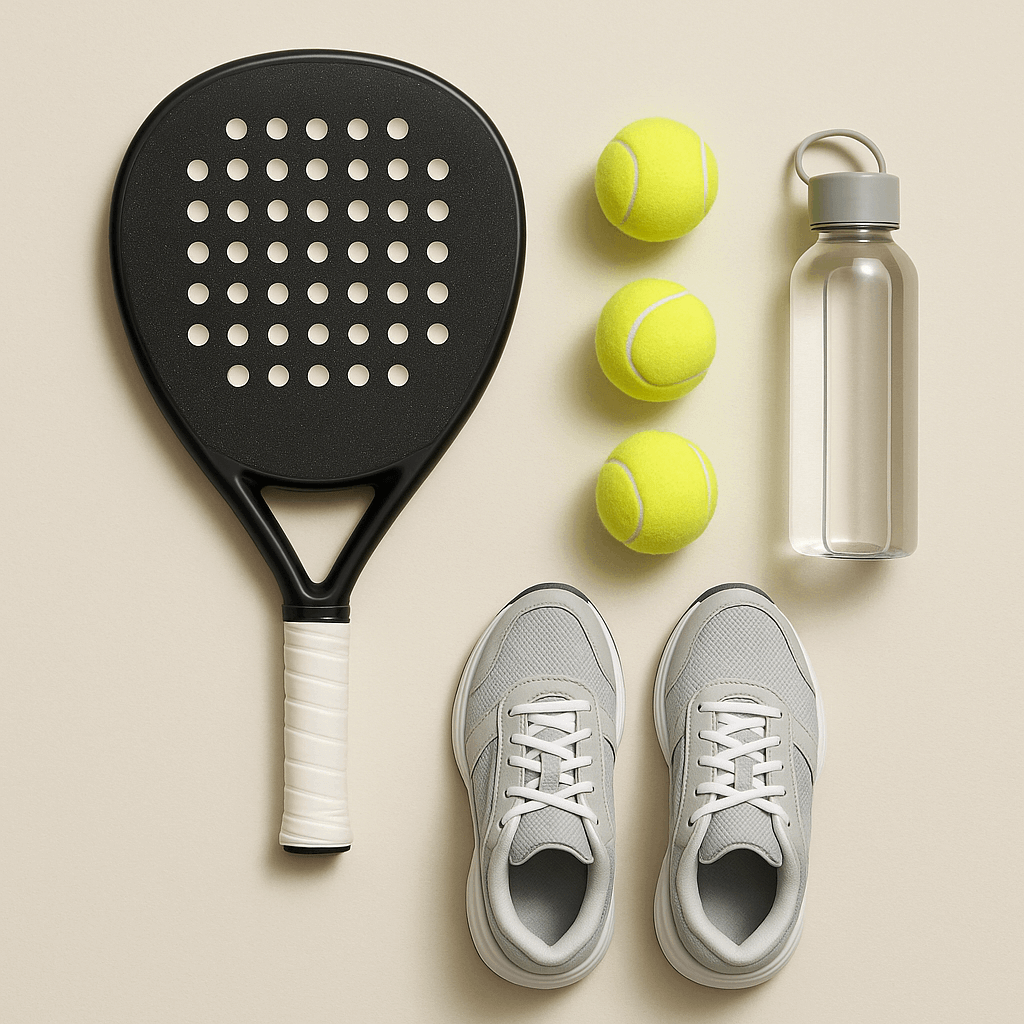
You don’t need much to begin playing. Most clubs can rent you a racket and sell or lend balls, so you can start without buying anything on day one. Shoes matter more than people think, though—padel involves quick stops, turns, and short sprints, and the wrong shoes can make you slip or feel unstable.
If you do want to buy your first setup, keep it boring at the start. A comfortable, control-focused racket and proper court shoes will help you learn faster than a “power” racket that punishes imperfect technique.
A simple starting setup is:
If you do want to buy your first setup, keep it boring at the start. A comfortable, control-focused racket and proper court shoes will help you learn faster than a “power” racket that punishes imperfect technique.
A simple starting setup is:
- a padel racket (beginner/control-oriented)
- padel balls
- court shoes with good grip and stability
- water (padel points can run long)
Booking a Court and Finding Games
The fastest way to start is to play at a club that already runs beginner-friendly games. Many venues organize social sessions, “Americano” style events, or beginner round-robins where you rotate partners and opponents. That format is ideal because you’ll get more reps and less pressure.
If you’re booking a court yourself, try to avoid your first session being “two beginners vs two experienced players.” It sounds useful, but it often turns into a match where beginners never touch the ball at the net and don’t learn the basics of building a point.
A better starting path is:
If you’re booking a court yourself, try to avoid your first session being “two beginners vs two experienced players.” It sounds useful, but it often turns into a match where beginners never touch the ball at the net and don’t learn the basics of building a point.
A better starting path is:
- play with other beginners or mixed-level players
- keep the score relaxed
- focus on long rallies rather than winning
Your First Session
In your first session, the biggest improvement comes from one thing: keeping the ball in play. Beginners often swing too big, aim too close to lines, and try to finish points early. In padel, that usually backfires.
Instead, treat your first sessions like skill-building disguised as a match. Aim through the middle, hit with a compact swing, and give yourself time to recover position after every shot. If you feel rushed, slow the rally down with a higher, safer ball rather than trying something risky.
A useful mental cue is: “Make them play one more shot.” If you can do that consistently, your results will improve naturally.
Instead, treat your first sessions like skill-building disguised as a match. Aim through the middle, hit with a compact swing, and give yourself time to recover position after every shot. If you feel rushed, slow the rally down with a higher, safer ball rather than trying something risky.
A useful mental cue is: “Make them play one more shot.” If you can do that consistently, your results will improve naturally.
Basic Rules to Know Before You Play
You don’t need to memorize every detail to start, but you should understand a few core rules so the match doesn’t stop every two points.
The serve is underhand and must land diagonally in the service box. After the bounce, the ball may hit the glass and stay in play, but it cannot hit the fence before bouncing. During rallies, the ball must bounce on the court before it can touch any wall and remain playable.
The point ends when the ball bounces twice on your side, goes out, or hits the fence before bouncing. If you’re unsure mid-rally, keep playing—most beginner confusion comes from stopping too early.
The serve is underhand and must land diagonally in the service box. After the bounce, the ball may hit the glass and stay in play, but it cannot hit the fence before bouncing. During rallies, the ball must bounce on the court before it can touch any wall and remain playable.
The point ends when the ball bounces twice on your side, goes out, or hits the fence before bouncing. If you’re unsure mid-rally, keep playing—most beginner confusion comes from stopping too early.
Common Beginner Mistakes in the First Weeks
The most common early mistake is rushing forward to the net as soon as the rally starts. Net position is powerful, but only if you arrive there together and under control. If you sprint forward alone or too early, you get passed or lobbed and spend the whole match turning around.
Another big mistake is ignoring the glass. Beginners often treat wall rebounds as “bad luck” instead of part of the game. If you learn to wait, let the ball rebound, and then hit calmly, you’ll instantly feel more comfortable from the back of the court.
Finally, many players start padel trying to copy tennis swings. In padel, shorter preparation and cleaner contact usually win. Think “compact and controlled,” not “big and fast.”
Another big mistake is ignoring the glass. Beginners often treat wall rebounds as “bad luck” instead of part of the game. If you learn to wait, let the ball rebound, and then hit calmly, you’ll instantly feel more comfortable from the back of the court.
Finally, many players start padel trying to copy tennis swings. In padel, shorter preparation and cleaner contact usually win. Think “compact and controlled,” not “big and fast.”
How to Apply This Tomorrow
For your next session, set one simple goal: build longer rallies. Start each point with a safe serve and a safe return, then keep the ball deep and through the middle until you see a clear chance to move forward with your partner. If you get lobbed, don’t panic—turn, let the glass help you, and reset the point instead of trying to finish from a bad position.
If you can leave the court feeling that your rallies got longer and your decisions got calmer, you’re starting padel the right way.
If you can leave the court feeling that your rallies got longer and your decisions got calmer, you’re starting padel the right way.
FAQ
No. Tennis experience can help, but padel has different positioning, shorter swings, and wall play that beginners can learn quickly.
If you’re buying one thing first, start with proper shoes. A beginner-friendly racket can come next once you know you’ll keep playing.
Most beginners feel more comfortable after 2–5 sessions, especially once they learn basic court positioning and how the glass works.
Yes, but together and at the right moment. Rushing the net too early is a common beginner mistake.
You can practice some basics alone, but padel improves fastest with a partner or structured drills.
For a simple first-purchase order, use the beginner equipment checklist.
If you are booking games, use padel levels explained to choose a realistic match level.
If you are wondering about difficulty, read is padel hard to learn?.