Bullpadel Elite W 2026 Review
Version and lineup identification
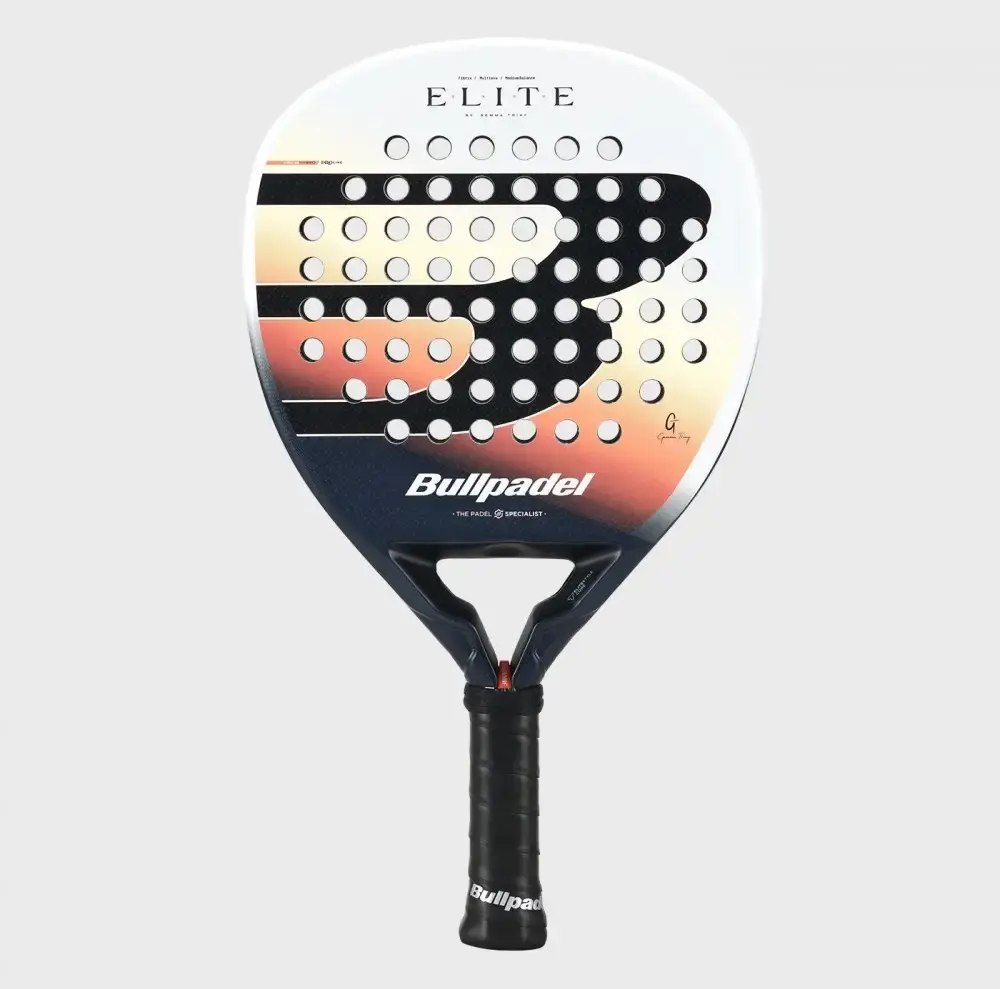
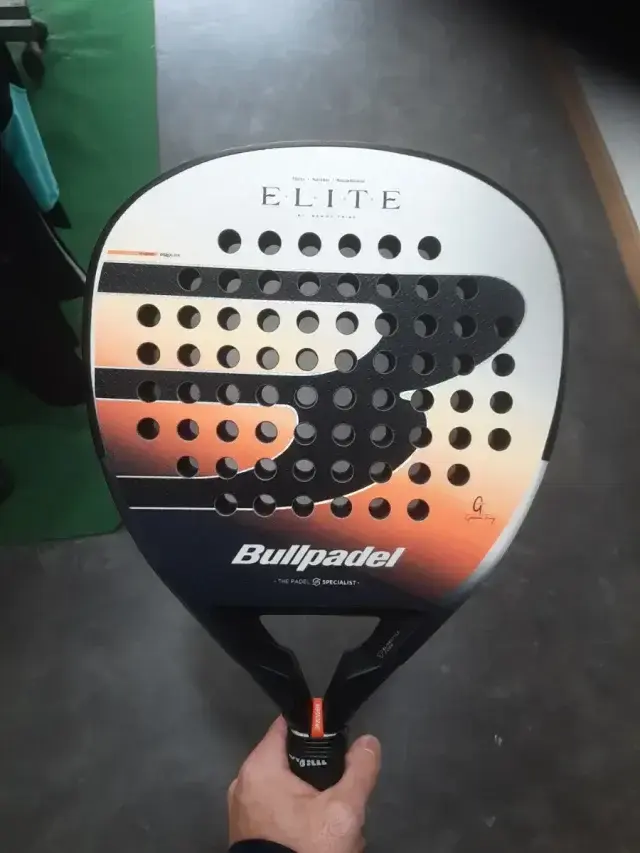
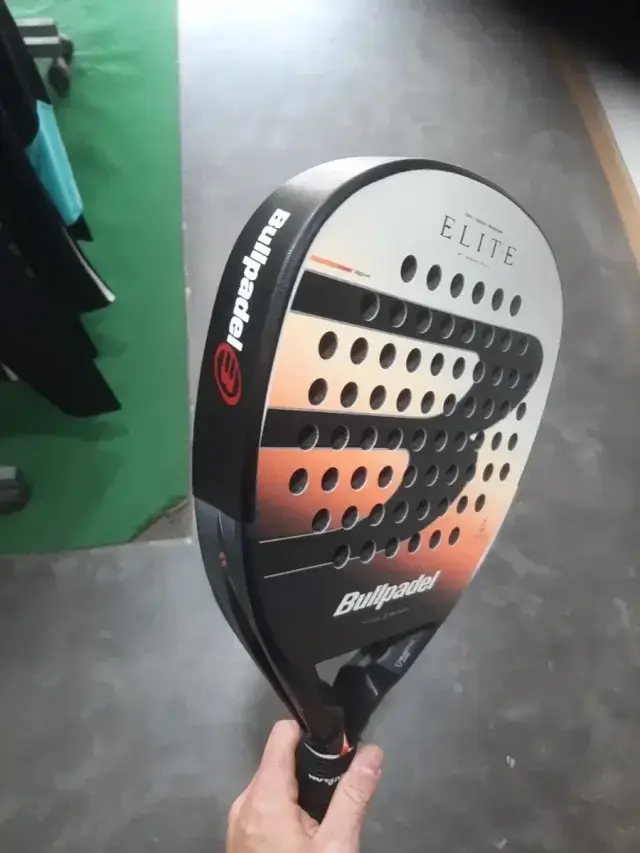
The Elite W 2026 represents the third-generation platform bearing Gemma Triay's signature, following the 2024 and 2025 versions that established the model as Bullpadel's top-selling women's racket across those seasons. The 2026 iteration introduces cosmetic refinement with sunset-gradient colorway inspired by Mediterranean aesthetics while maintaining the fundamental construction and geometry specifications that defined previous versions. No parallel "Elite W Pro" or "Elite W Soft" variants exist within the 2026 catalog—Bullpadel offers only this single specification targeting the broad intermediate-to-advanced women's segment.
Within Bullpadel's women's lineup, the Elite W occupies the versatile all-around position between the control-oriented Wonder (Claudia Fernández's signature platform emphasizing precision over power) and the attack-oriented Pearl W (Bea González's diamond-shaped power platform). The Vertex 05 Woman and Flow Legend W represent alternative balanced options, though the Vertex skews toward higher balance points while the Flow Legend emphasizes lightweight maneuverability for veteran players. The Elite W serves as the reference mid-point platform—neither the most powerful nor most controlled, but offering the widest usability window across playing styles and court positions.
Manufacturing occurs at Bullpadel's primary facility with quality control protocols consistent across the women's Pro Line collection. Retail availability began January 2026 with MSRP positioning at €249-269 depending on regional market, placing it in the premium women's category alongside NOX AT10 women's offerings and HEAD Extreme women's platforms.
Technical specifications
| Spec | Value | What it means |
|---|---|---|
| Shape | Teardrop / hybrid geometry (between round and diamond) | High balance, power-oriented |
| Thickness | 38 mm (standard) | Thicker = more power and rebound |
| Weight (claimed) | 340-350 g (unstrung, without overgrip) | Heavier = more stability, lighter = more speed |
| Playing weight | ~350-360 g with single overgrip application | Heavier = more stability, lighter = more speed |
| Balance | Medium-low (~25.8-26.1 cm from handle end) | Versatile, suits all styles |
| Face material | Fibrix (carbon + fiberglass composite) | Softer feel, more forgiving |
| Core | MultiEVA (multi-density EVA construction, softer external layer transitioning to firmer internal density) | Good balance of control and feel |
| Frame construction | 100% carbon tubular | Structural rigidity and durability |
| Surface texture | 3D rough finish (Top Spin texture pattern) | Determines feel and response |
| Frame technology | Airtrac Channel (side grooves for aerodynamics), Elite Core (pentagonal heart reinforcement), Dual Tubular (double-thickness frame reinforcement) | Structural rigidity and durability |
| Handle | Standard Bullpadel Hesacore grip compatibility, Vibradrive vibration dampening system integrated | |
| Target player | Intermediate to advanced women (levels 3.5-5.0 DUPR equivalent) | |
| Playing style | All-around with defensive emphasis, suitable for both baseline and net-forward positioning |
Construction and materials
The Elite W employs Fibrix composite construction for the playing surface, representing Bullpadel's hybrid approach to face material specification. Fibrix combines carbon fiber weave with fiberglass reinforcement in a layered construction that targets the middle ground between pure fiberglass softness and full carbon stiffness. The fiberglass component contributes flexibility and vibration absorption, creating arm-friendly impact characteristics, while the carbon layer maintains structural rigidity for ball response consistency and torsional stability. This combination produces a medium-firm feel on contact that proves more forgiving than aggressive full-carbon platforms while avoiding the excessive softness and limited durability associated with pure fiberglass specifications.
The frame tubular construction utilizes 100% carbon reinforcement with Dual Tubular technology—a double-wall thickness design at critical stress points that increases torsional rigidity without adding significant mass. This specification enhances stability during off-center contact and maintains frame geometry integrity under repeated impact stress. The Airtrac Channel system incorporates aerodynamic grooves along the frame sides, reducing air resistance during swing acceleration and theoretically enabling faster racket head speed, though practical impact remains difficult to isolate from overall balance and mass distribution effects.
The MultiEVA core represents Bullpadel's standard multi-density foam construction, featuring softer external layers near the face surface transitioning to firmer internal density toward the core center. This graduated density profile attempts to balance immediate impact absorption (reducing arm shock) with responsive energy return (maintaining ball velocity). The Elite Core geometry—a pentagonal reinforcement structure at the heart area—provides additional rigidity in the high-stress transition zone between handle and face, theoretically improving power transfer efficiency and reducing frame flex during maximum-force impacts like overhead smashes.
Shape and mould behavior
The teardrop geometry creates a sweet spot positioned in the mid-to-upper face area, approximately 3-5 cm above the geometric center. This placement favors contact zones naturally encountered during volleys, defensive blocks, and mid-court groundstrokes while remaining accessible for overhead smashes when players achieve proper positioning. The shape represents a compromise between round control platforms (which concentrate response in the geometric center) and diamond attack platforms (which position sweet spots near the upper edge for maximum leverage on smashes).
Balance point specification at approximately 25.8-26.1 cm from handle end creates medium-low mass distribution that falls between pure control (24-25 cm) and aggressive attack (27-28 cm) platforms. This positioning enables relatively quick maneuverability for defensive retrievals and net-reaction scenarios while maintaining sufficient head weight to generate momentum during attacking strokes without requiring perfect technique. The specification proves particularly effective for players who transition between court positions rather than specializing in pure baseline or pure net play.
Swing inertia characteristics reflect the lightweight specification (340-350g) combined with the medium-low balance point. The platform accelerates quickly from stationary positions, facilitating rapid direction changes during fast net exchanges and defensive retrievals where reaction time becomes critical. However, the relatively light head weight compared to diamond platforms reduces maximum smash velocity potential—players generating peak power will find the Elite W delivers less ball speed than heavier, more head-heavy alternatives like the Pearl W or Vertex 05 GEO. The trade-off favors consistency and accessibility over specialization in single dimensions.
Stiffness, feel, and comfort
The Fibrix composite face construction produces a medium-firm response that sits between soft fiberglass platforms and stiff full-carbon specifications. Initial contact creates noticeable dwell time—the ball compresses into the face surface before rebounding—providing tactile feedback that allows players to perceive shot execution quality. This characteristic proves particularly valuable for intermediate players developing placement consistency, as the sensation of "feeling" the ball enables micro-adjustments to swing path and contact angle based on immediate feedback.
Vibration transmission to the hand and arm registers as moderate, substantially lower than aggressive carbon platforms like the Metalbone series or Vertex 05 GEO, but slightly higher than pure soft-foam comfort-oriented platforms. The Vibradrive dampening system integrated into the handle reduces peak vibration frequencies, while the MultiEVA core's graduated density profile absorbs impact shock before transmitting force through the frame. Multiple testers specifically mentioned the absence of arm discomfort during extended play sessions, suggesting the platform successfully balances responsive feel with physiological comfort requirements.
The rebound behavior demonstrates linear characteristics—ball velocity output scales proportionally with swing speed input without sudden acceleration thresholds or unpredictable energy return patterns. This consistency enables players to develop reliable power calibration across different shot types and court positions. The platform responds predictably whether executing soft touch volleys requiring minimal pace, mid-court transition drives demanding moderate power, or baseline smashes requiring maximum velocity. Players transitioning from softer platforms may initially perceive insufficient "pop" or assistance, as the Elite W rewards technique rather than amplifying marginal contact quality through forgiving construction.
Sweet spot and forgiveness
The teardrop geometry concentrates the primary sweet spot in the mid-to-upper face area, spanning approximately 100-120 cm² depending on how stringently "sweet spot" is defined (the zone where contact produces optimal power, control, and feel simultaneously). This positioning aligns naturally with contact zones encountered during volleys, blocks, and overhead preparation positions, though players must elevate the racket appropriately to intersect the sweet spot during groundstrokes from low ball heights.
Off-center contact performance emerged as a consistent strength across independent testing. Impacts occurring 3-5 cm outside the optimal response zone maintained sufficient control and depth to remain competitive in rally situations, with reviewers specifically noting forgiveness relative to aggressive diamond platforms where mishits frequently result in frame shots or significantly degraded ball velocity. The Fibrix face material contributes to this characteristic through its dampening properties—the fiberglass component absorbs torsional forces that would twist stiffer carbon faces during off-center impact, maintaining directional consistency even when contact occurs toward frame edges or sweet spot periphery.
The frame's torsional stability through Dual Tubular construction and Elite Core reinforcement supports forgiveness by resisting twist during asymmetric loading. When contact occurs off-center, the resulting rotational force attempts to twist the racket face around its longitudinal axis—stiffer frames resist this motion more effectively, maintaining intended shot direction despite imperfect contact location. The Elite W demonstrates adequate torsional rigidity for intermediate competitive play, though not matching the absolute stability of heavier, stiffer platforms like the AT10 18K or Vertex 05 GEO. Players with inconsistent contact patterns will benefit from the forgiveness envelope, while advanced players seeking maximum precision may prefer tighter response zones that reward perfect centering.
Power and smash behavior
Maximum power output capability positions the Elite W in the moderate range relative to the broader women's racket market. The medium-low balance point and lightweight specification (340-350g) limit momentum generation during overhead swashes compared to head-heavy platforms like the Pearl W or Flow Legend W, which concentrate additional mass near the racket head to increase kinetic energy at impact. Players capable of generating high swing speeds will perceive a ceiling in peak ball velocity—the Elite W delivers competitive power for intermediate players but cannot match the absolute smash velocity produced by aggressive attack platforms wielded by advanced players with optimal technique.
Power accessibility represents a core strength. The MultiEVA core tuning and Fibrix face construction enable intermediate players to generate competitive ball velocity without perfect technique, maximum effort, or elite swing speed. The responsive EVA rebounds the ball efficiently even when contact occurs with moderate force, while the fiberglass component in the face material contributes slightly higher rebound coefficient than pure carbon (which absorbs more energy, requiring greater input force to achieve equivalent output velocity). This characteristic proves particularly valuable for players transitioning from recreational to competitive play, as the platform rewards improved technique with incrementally increased power rather than requiring technique thresholds before delivering usable velocity.
Smash execution from proper overhead positioning demonstrates consistent depth and pace when players achieve solid contact in the sweet spot zone. The platform generates sufficient velocity to pressure opponents and create winning opportunities through pure pace, though not achieving the "terminator shot" capability associated with maximum-power platforms. Players emphasizing placement and consistency over pure velocity will find the power output appropriate, while those seeking to dominate points through aggressive overhead finishing may prefer higher-balance alternatives that amplify swing momentum into maximum ball speed.
Net play and fast exchanges
Performance during rapid net exchanges proved consistently effective across testing scenarios. The lightweight specification (340-350g) combined with medium-low balance enables quick racket acceleration from stationary positions, facilitating reaction volleys and blocks when incoming pace reduces available reaction time. The platform transitions smoothly between defensive blocks (absorbing opponent pace through controlled absorption) and attacking punch volleys (adding player-generated pace to redirect balls aggressively).
The Fibrix face construction contributes to net performance through its dampening characteristics—rapid exchanges often involve imperfect contact under time pressure, and the fiberglass component maintains control and directional consistency even when contact occurs outside optimal sweet spot zones. Multiple testers specifically mentioned feeling confident during fast net exchanges, noting the platform responded predictably without producing erratic rebound angles or excessive velocity that would send balls long under incoming pace.
Touch and placement precision during soft hands situations (drop volleys, angle volleys requiring finesse rather than power) demonstrated adequate sensitivity. The medium-firm feel provides sufficient feedback to execute controlled placements, though players seeking maximum touch sensitivity may prefer softer platforms with more pronounced dwell time. The balance point positioning proves effective for net-forward play—neither excessively head-light (which can reduce stability under incoming pace) nor excessively head-heavy (which slows reaction speed during defensive blocks).
Stability on off-center contact
Torsional resistance during asymmetric impact loading registers as adequate for intermediate competitive play though not exceptional relative to premium full-carbon platforms. The Dual Tubular frame construction and Elite Core pentagonal reinforcement provide structural rigidity that resists twisting when contact occurs away from the longitudinal axis centerline, maintaining directional consistency during mishits that would produce significant deviation on less rigid platforms.
The Fibrix face material contributes to practical stability through its dampening properties rather than absolute stiffness. When off-center contact creates torsional forces attempting to rotate the racket face, the fiberglass component absorbs some rotational energy while the carbon layer maintains structural integrity—the result is reduced twist magnitude compared to pure fiberglass platforms while avoiding the harsh, unforgiving response of ultra-stiff carbon specifications that transmit all impact forces directly to the player's hand and arm.
Performance during defensive blocks under maximum incoming pace reveals the practical limits of the Elite W's stability specification. When opponents generate peak ball velocity through aggressive smashes, off-center contact can produce noticeable frame deflection and reduced control compared to heavier, stiffer platforms that resist deflection through absolute mass and rigidity. Advanced players facing elite-level pace may prefer platforms with higher torsional resistance specifications, while intermediate players will find the Elite W's stability adequate for typical competitive scenarios where incoming pace remains within manageable ranges.
Practical on-court takeaways
The Elite W proves most effective for intermediate to advanced women players (approximately 3.5-5.0 DUPR level equivalent) who emphasize court coverage, defensive reliability, and tactical versatility rather than specializing in aggressive overhead finishing. The platform rewards players who construct points through consistent depth, opportunistic net approaches, and controlled placement rather than those seeking to dominate through pure power. The balance specification and accessible power generation enable comfortable extended play sessions without accumulating arm fatigue, making the racket suitable for tournament formats requiring multiple matches in single days.
Players transitioning from recreational to competitive play will find the Elite W accommodating, as the forgiving sweet spot and predictable rebound characteristics support skill development without punishing technical imperfections excessively. The platform provides clear feedback regarding contact quality while maintaining sufficient forgiveness to keep balls in play during the learning process. However, players expecting significant "free power" or assistance may find the response too honest—the Elite W rewards technique rather than compensating for deficiencies through extreme rebound characteristics.
The cosmetic design garnered consistent positive feedback across reviewers and testing environments, with multiple sources describing the 2026 sunset-gradient colorway as the most aesthetically appealing women's platform in Bullpadel's lineup. While cosmetics do not impact technical performance, visual appeal influences purchasing decisions and player confidence, making the design refinement a practical consideration beyond pure specifications.
Comparison within the brand lineup
The Elite W occupies the neutral versatility position—neither the most controlled (Wonder), most powerful (Pearl W), nor most balanced between power-control extremes (Vertex 05 Woman). This positioning creates the widest usability window across playing styles and skill levels, explaining the model's commercial success as Bullpadel's top-selling women's platform across 2024-2025 seasons. Players uncertain about their specific requirements or those emphasizing adaptability over specialization will find the Elite W accommodating, while those with clear preferences toward control or power may benefit from alternatives at either end of the lineup spectrum.
Comparison with other brands
The Elite W distinguishes itself through Fibrix construction and medium-low balance that prioritize versatility and accessibility over specialization. Compared to NOX control-oriented offerings, the Elite W provides slightly more power output and higher balance point while sacrificing some precision and touch sensitivity. Relative to aggressive diamond platforms from HEAD, Adidas, and Babolat, the Elite W offers substantially greater forgiveness, lighter handling, and arm-friendly comfort at the cost of reduced maximum power ceiling. The platform serves players seeking the widest usability window rather than peak performance in single dimensions.
Technical positioning
The Elite W targets the intersection of intermediate skill development and competitive all-around play. The specification package—lightweight construction, medium-low balance, Fibrix composite face, MultiEVA core—creates a platform that accommodates technical imperfections through forgiveness while remaining responsive enough to reward improved execution with incrementally enhanced performance. This positioning makes the racket particularly suitable for players in the 3.5-4.5 skill range who are developing competitive technique and tactical understanding without yet possessing the consistency and power generation of elite-level players.
The Fibrix face construction represents a deliberate materials choice targeting the middle ground between pure comfort (fiberglass) and pure performance (carbon). Players prioritizing arm health and extended play comfort over maximum power output will appreciate the vibration-dampening characteristics, while those seeking peak performance across all dimensions may find the compromise insufficient. The specification acknowledges that most women's competitive padel occurs at intermediate rather than elite levels, where accessible power and forgiveness prove more valuable than specialized attack capabilities.
Balance point positioning at medium-low creates a versatility envelope enabling effective performance across multiple court positions and shot types. The Elite W functions competently from baseline defensive positions, mid-court transition zones, and net-forward attacking positions without requiring players to adapt swing mechanics or technique based on court location. This adaptability supports the modern women's game emphasis on mobility and position flexibility rather than rigid role specialization, though players who predominantly operate from single court zones may benefit from more specialized balance specifications optimizing performance for their preferred positioning.
Common questions
The Elite W targets intermediate to advanced women players approximately in the 3.5-5.0 DUPR skill range, though the platform accommodates a wider usability window than this range suggests. The forgiving sweet spot and accessible power generation support players developing competitive technique who have not yet achieved the consistency and power output characteristic of elite-level play. Advanced players will appreciate the defensive reliability and comfortable extended-play characteristics, though those seeking maximum power output or surgical control precision may prefer more specialized platforms at either end of Bullpadel's women's lineup. The platform rewards improved technique with incrementally enhanced performance rather than imposing technique thresholds that limit usability for developing players, making it particularly effective during the transition from recreational to competitive play.
Both platforms target balanced all-around performance, but the Elite W emphasizes defensive reliability and accessible power while the Vertex 05 Woman skews toward higher power ceiling with maintained control capability. The Vertex utilizes higher balance point (approximately 26.3-26.6 cm versus Elite W's 25.8-26.1 cm) and full Xtend Carbon 12K face construction rather than Fibrix composite, creating greater smash velocity potential but reduced forgiveness on off-center contact. Players confident in their overhead technique and seeking maximum attacking output will prefer the Vertex, while those prioritizing comfort, forgiveness, and defensive consistency will find the Elite W more accommodating. The Elite W's medium-low balance enables quicker maneuverability during defensive retrievals, while the Vertex's higher balance amplifies power generation during offensive transitions from mid-court positioning.
The Fibrix composite construction—combining carbon with fiberglass—demonstrates adequate durability for competitive use spanning 6-12 months of regular play (3-4 sessions weekly) before surface texture degradation or structural fatigue becomes noticeable. The fiberglass component introduces slightly higher wear rate compared to pure carbon platforms, particularly in the high-impact sweet spot zone where repeated smash contact gradually smooths surface texture and reduces spin generation capability. However, the moderate texture specification (3D rough finish rather than aggressive sanded surfaces) extends practical lifespan relative to extreme-texture platforms that wear more rapidly. Players should monitor surface condition and consider replacement when texture loss becomes apparent or structural cracks develop near high-stress frame zones, typically occurring after 100-150 hours of intensive competitive use depending on playing style impact patterns.
The Elite W generates competitive power output for intermediate-level aggressive play, though players seeking maximum smash velocity for overhead finishing specialization may find the power ceiling limiting. The medium-low balance point (25.8-26.1 cm) and lightweight specification (340-350g) create less momentum during overhead acceleration compared to head-heavy platforms like the Pearl W or Flow Legend W that concentrate additional mass near the racket head. Players with confident technique capable of generating high swing speeds will perceive this ceiling, while intermediate players developing overhead consistency will find the power output adequate for creating winning opportunities through pace. The accessible power characteristics prove more valuable for players emphasizing point construction through tactical placement and opportunistic finishing rather than those building game plans around overhead dominance and pure velocity.
The platform demonstrates strong arm-friendly characteristics through multiple construction elements addressing vibration transmission and impact shock. The Fibrix face with fiberglass component absorbs high-frequency vibrations that rigid carbon faces transmit directly to soft tissue, while the MultiEVA core's graduated density profile dampens impact force before reaching the player's hand and arm. The Vibradrive system integrated into the handle provides additional vibration reduction, and the medium-firm feel avoids the harsh, unforgiving response of ultra-stiff platforms that aggravate existing arm conditions. Players managing tennis elbow, wrist strain, or shoulder issues will likely tolerate the Elite W well during extended play sessions, though individual physiological response varies. Those with severe arm sensitivity may benefit from consulting medical professionals and considering pure soft-foam platforms like entry-level fiberglass specifications that prioritize comfort above all performance dimensions.
The 2026 iteration maintains core construction specifications and geometry consistent with 2024-2025 versions, with primary changes occurring in cosmetic design rather than technical performance characteristics. The sunset-gradient colorway with golden heart detail represents the most visible update, while fundamental specifications including Fibrix face material, MultiEVA core, teardrop geometry, and balance point positioning remain unchanged. Bullpadel's approach reflects satisfaction with the Elite W's performance profile and commercial success—the platform achieved top-selling status within the women's lineup across 2024-2025 seasons, indicating market acceptance of the existing specification package. Players transitioning from previous Elite W versions will experience familiar performance characteristics without requiring adaptation period, while new users can reference feedback and testing data from earlier generations with confidence that observations remain applicable to the 2026 model.
Technical performance score
Ten categories, each 0–10. Methodology →
- Maneuverability and handling7.5
- Net performance under pace8.0
- Control and placement precision7.5
- Defensive output and depth access8.5
- Off-center stability and torsional resistance7.0
- Sweet spot usability7.0
- Spin generation potential7.0
- Power ceiling6.5
- Power accessibility8.0
- Comfort and impact feedback8.0
Final verdict — Bullpadel Elite W scores 75/100. A strong performer with excellent comfort and arm-friendly feedback, a solid choice for intermediate to advanced players.